Finding the right DAM system – Structured selection process for B2B companies
Today, modern digital asset management (DAM) is much more than just a media archive. It is the backbone of efficient content processes across marketing, sales, e-commerce, and international teams.
But choosing a DAM system is complex: the market is confusing, requirements are high, and wrong decisions cost time, money, and acceptance.
The challenge – Why choosing a DAM system is so difficult
Choosing a suitable DAM system is particularly challenging for medium-sized companies. Different departments, complex system landscapes, and a dynamic provider market make it difficult to make an informed decision.
Typical challenges when selecting a DAM system
- outdated or overloaded DAM systems lead to bottlenecks, inefficient workflows, and security risks
- high integration requirements for PIM, CMS, e-commerce, and marketing automation
- low user acceptance due to poor usability or unclear processes
- lack of overview when comparing DAM systems
- unclear internal requirements and lack of prioritization of must-haves
All reasons for changing DAM systems, typical warning signs, and practical examples can be found here:
Why you should act now
- content volumes and channels are growing exponentially
- outdated DAM systems are becoming business-critical risks
- integration landscapes are becoming more complex and prone to errors
- shadow IT and inefficient workarounds are on the rise
Without a structured approach to DAM selection, the risk of making the wrong decision increases significantly.
Get your bearings now!
Our solution: A structured DAM selection process
As an experienced, technology-neutral partner, we guide you through a clearly defined DAM selection process for B2B companies that takes your organization, processes, and system landscape into account.
Six steps to finding the right DAM system
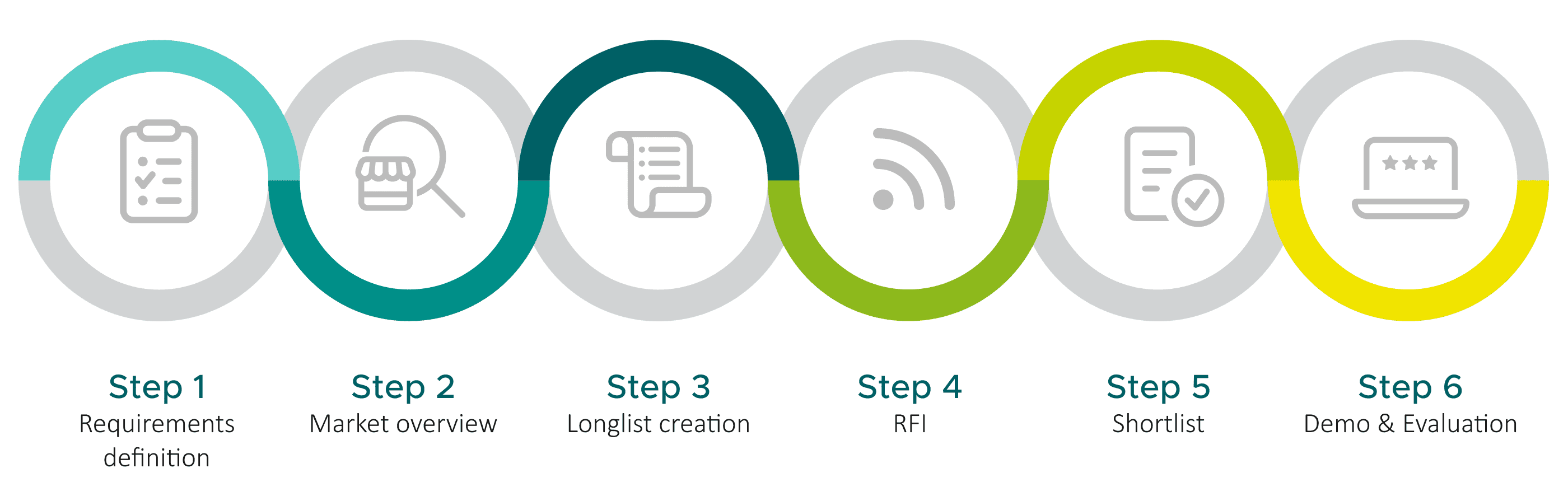
1. Requirements definition instead of feature lists
Together, we identify the relevant use cases, workflows, role models, governance, and integrations – tailored precisely to your organization.
2. Vendor-Neutral Market Overview
We provide you with transparency regarding relevant DAM providers without vendor bias.
3. Longlist and Shortlist
You receive a realistic narrowdown to systems that truly fit your needs.
4. RFI – Structured Comparability
Uniform, customized criteria instead of marketing promises.
5. Pitch Briefing & Demo Management
Providers present real-world scenarios from your daily work. They don't show what they want – but rather your exact, relevant scenarios.
6. Evaluation Matrix & Decision Confidence
Objective evaluation, clearly weighted and transparent.
You can find the detailed 6-step process, including the evaluation matrix, stakeholder management, and practical tips, here:
Are you under time pressure? Find the right solution quickly with our accelerated DAM selection process!
When requirements are clear and quick decisions are needed, our accelerated DAM selection process provides clarity and speed. We consolidate relevant options, evaluate them systematically, and quickly create clarity for the next steps.
Why communicode is the right partner for your DAM system selection
20+ Years of Experience
For over two decades, we have been experts in DAM, PIM, E-Commerce, UX & Digital Architectures.
Vendor-Neutral & Technology-Open
We recommend only solutions that fit your company.
Proven Methodology
Our structured DAM selection process is the result of numerous B2B projects and continuous development.
Practical Expertise
Our consulting is based on real-world project experience – from integration issues to user acceptance.
Let's start your selection process together!
No obligation. Friendly and personal. Vendor-neutral.
Not quite ready yet? Download our DAM selection checklist!
Are you just starting your DAM selection process? Our checklist helps you to systematically and comprehensively define the requirements for your future Digital Asset Management system. It guides you step by step through all relevant criteria – from use cases and workflows to interfaces and system integration, as well as governance, scalability, and security. This way, you create a sound basis for your decision, avoid typical mistakes in DAM selection, and optimally prepare your project.