UX trends 2026: The future that clicks
User experience must be smarter, more transparent, and more adaptable in 2026. Customers expect proactive services, visible trust signals, and interfaces that adapt to the situation. AI will become the connecting factor between speed, personalization and compliance. This is important for brands with large product ranges, complex journeys, or strict regulatory frameworks.
10 practical user experience trends for B2B and B2C companies
Here are 10 practical trends. What are they? Why are they important? Who uses them and who might find them interesting?
Conversational commerce:
Consulting and purchasing through dialogue
What is it? And why is it a trend for 2026?
Conversational commerce brings consulting, searching, and transactions into chat and voice dialogues – in messengers, apps, and voice environments. Users can ask questions, receive recommendations, and make purchases without media discontinuity, which shortens decision-making processes and improves conversion. In 2026, this approach will gain importance because personalized, fast interactions will become the standard. According to a recent study, 83 % of consumers worldwide would browse or buy products directly in messaging apps. This is a clear signal of the growing relevance of this approach.
Who is already using it?
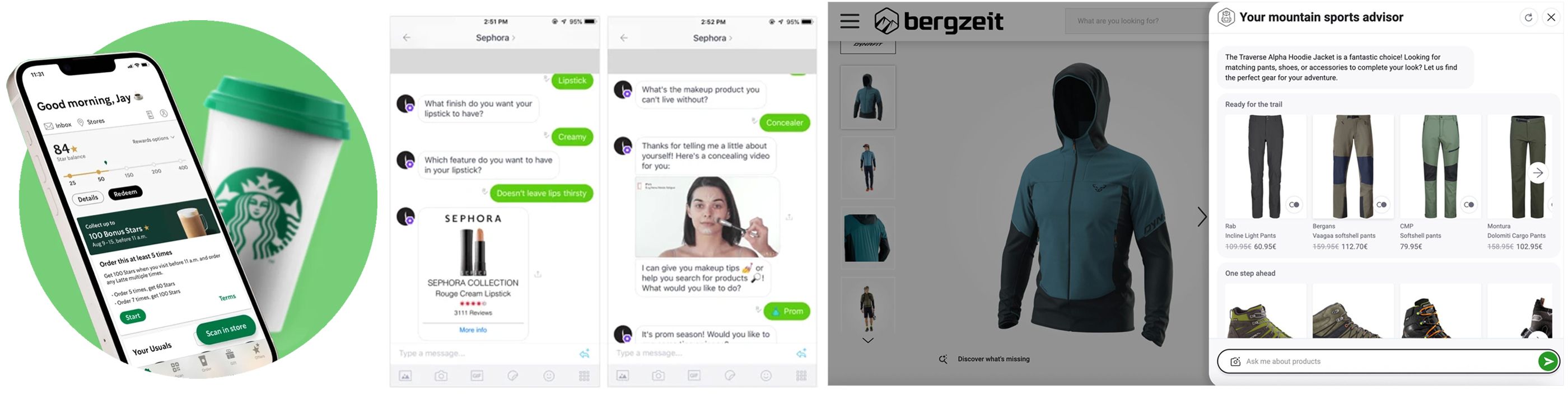
Starbucks uses Deep Brew to personalize recommendations, simplify orders, and link everything to loyalty mechanisms.
Sephora uses chatbots for tips, tutorials, product recommendations, and appointment bookings. (Sephora Virtual Artist App)
Bergzeit replaces static filters with a dialog-based shopping assistant that clarifies requirements and leads directly to the order in the chat.
Who is this interesting for?
For B2C retailers, service providers, and D2C brands, conversational commerce is a lever for conversion, shopping cart, and service costs. B2B companies benefit from guided dialogues and automated process steps for portfolios that require explanation, reorders, and lead qualification.
Predictive UX:
Proactive experiences through AI
What is it and why is it important in 2026?
Predictive UX anticipates needs and suggests content, products, or materials before users actively search for them. Predictions are based on history, patterns, in-session signals, and external factors such as availability or weather. 71 % of young target groups (Gen Z) expect hyper-personalized, predictive experiences, which increases the pressure to implement proactive interfaces.
Who is already using it?
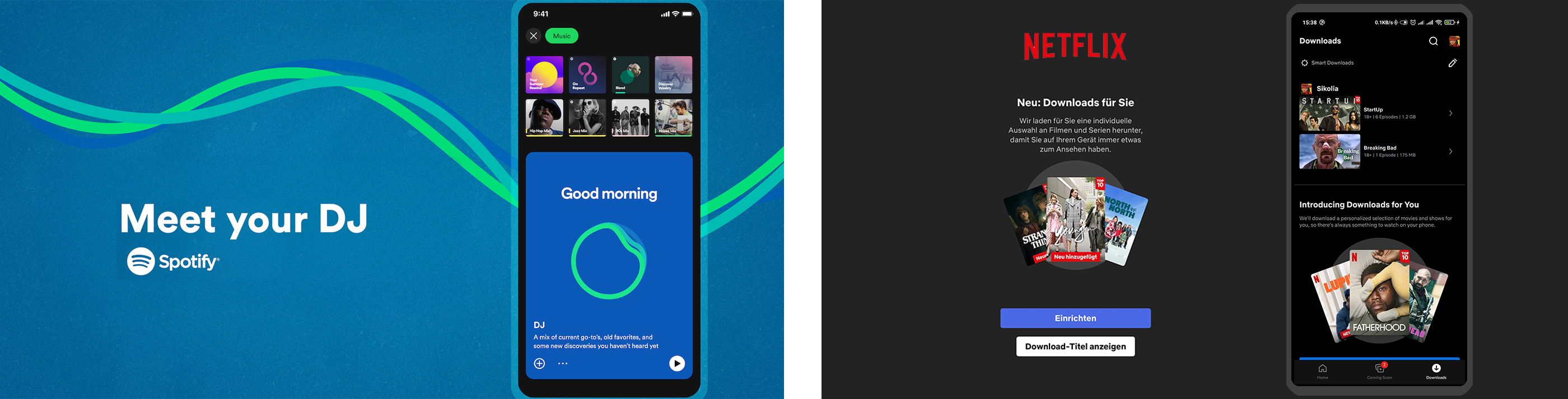
Spotify uses AI DJ to independently curate a personalized music stream, comment on transitions, and proactively switch between genres and moods without active searching by users.
Netflix automatically downloads series and movies to the device via “Downloads for You” after opting in to the app, based on individual viewing history and defined storage limits, so that suitable content is available offline.
Who is this interesting for?
B2B benefits in procurement and service through predictive reordering, lower error rates, and more stable supply chains. B2C increases relevance, reduces search effort, and increases conversion through proactive product recommendations and context-sensitive CTAs.
AI-supported rapid prototyping:
Test faster, decide better
What is it and why is it important in 2026?
Rapid prototyping quickly transforms ideas into clickable flows or simple MVPs that can be tested immediately. AI generates layouts, states, and entire journeys from limited inputs, accelerating learning loops and reducing the risk of costly missteps. This will be relevant in 2026 because time-to-market and validation speed are crucial for budget efficiency and prioritization.
Who is already using it?
I haven't found any direct use cases, but AI prototyping tools such as Figma AI and Uizard list Elgato, Adidas, and Uber among their customers.
Who might find this interesting?
In short: anyone who rarely or never tests because prototyping is too time-consuming. B2B platforms or portals with complex roles and processes can use it to quickly test hypotheses, speed up approvals, and shorten concept phases. B2C teams with a high release tempo can quickly run through variants, prioritize them based on data, and reduce rework costs. The tools make testing faster and cheaper, but they do not replace UX expertise, because professionally planned and evaluated tests are crucial for real added value.
Data-driven personalization & adaptive interfaces
What is it and why is it important in 2026?
Data-driven personalization uses first-party data and in-session signals to deliver content, recommendations, and CTAs based on the situation. Adaptive interfaces go one step further and dynamically change visible UI elements such as teasers, tiles, menu boards, or navigation areas based on intent, context, and device. Customers expect relevance, and brands see measurable effects in conversion, shopping cart, and loyalty.
Who is already using it?
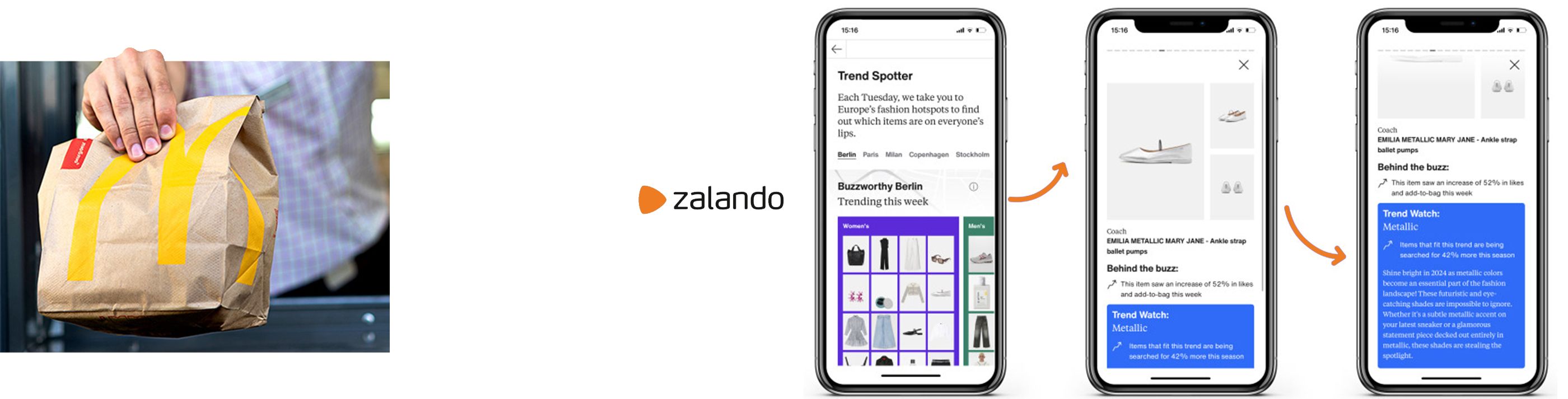
McDonald's displays “recommended items” on digital menu boards and self-order kiosks in real time based on the time of day, weather, store traffic, popularity, and current selection. The results are continuously A/B tested (Dynamic Yield Case Study). Zalando uses “Trend Spotter” to curate weekly styles based on search, like, and shopping cart signals and guides customers through the product range with the Zalando Assistant (Zalando Corporate).
Who is this interesting for?
B2B accelerates time-to-relevance in portals, demos, and knowledge bases and increases attachment rates for services. B2C increases shopping carts and satisfaction through pinpoint recommendations that adapt to the situation and intent.
Ethical AI & Compliance UX:
Trust through transparency
What is it and why is it important in 2026?
Ethical AI & Compliance UX make the use of AI, data, and decision-making systems visible and traceable. The EU AI Act is gradually coming into effect. Violations can result in heavy fines, which puts transparency, documentation, and governance at the center of attention. Customers increasingly expect to be able to clearly see whether an AI agent is responding and why a decision has been made.
Who is already using it?
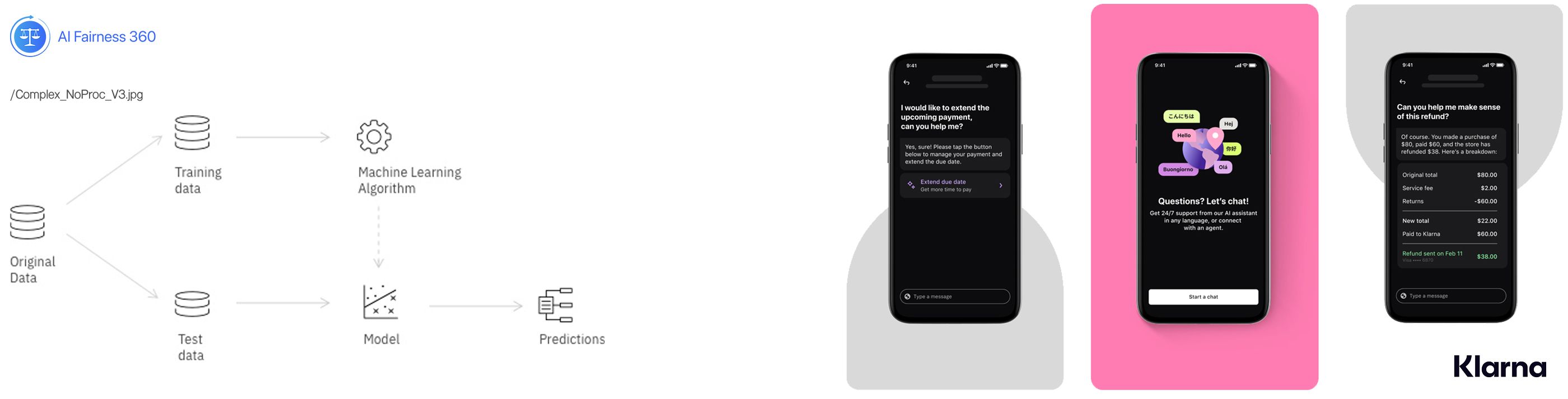
IBM has launched AI Fairness 360. Since July 2020, it has been further developed as open source by the Linux Foundation. Open toolkit with over 70 fairness metrics and bias mitigations (pre-/in-/post-processing) for fairness audits, monitoring, and verification in enterprise UX.
Klarna labels AI interactions, offers the option of a live agent, and reports significant effects on service KPIs following the rollout of the AI Assistant.
Who is this interesting for?
B2B facilitates the implementation of audit-proof processes in purchasing, due diligence, and operations. B2C increases trust, reduces service costs, and protects brands and conversions through visible and understandable AI transparency.
Authenticity & Provenance UX:
Making origin visible
What is it and why is it important in 2026?
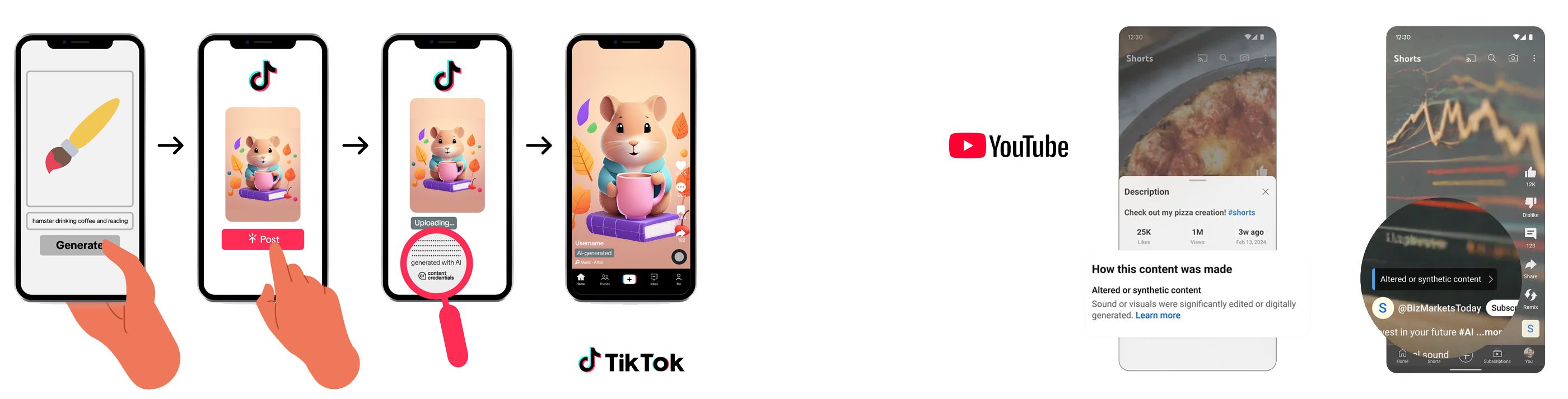
Authenticity & Provenance UX make the origin and processing of media visible, for example via content credentials according to C2PA. In times of generative production, verifiable evidence strengthens trust in product images, videos, reviews, and advertising materials. Large platforms require or support labeling for synthetic content, which further establishes the new standard (YouTube Disclosure; TikTok/C2PA initiatives).
Who is already using it?
YouTube requires disclosure labels for realistically altered or synthetic content and places notices prominently, especially for sensitive topics.
TikTok reads C2PA metadata, auto-labels AI content, and plans to obtain credentials upon export. The platform has also joined the CAI/C2PA.
Who is this interesting for?
B2B brands, marketplaces, and retail media teams ensure asset integrity across the supply chain and accelerate approvals. B2C shops increase trust, reduce queries and chargebacks, and thus stabilize conversion.
Composable UX:
Modular UX for flexible commerce stacks
What is it and why is it important in 2026?
Composable UX connects design systems with API-first services (MACH), allowing teams to assemble experiences from reusable components and decoupled functions. This increases release velocity, lowers TCO, and makes roadmaps resilient because changes are rolled out in small, measurable increments. Industry reports show broad adoption and good ROI expectations fulfillment.
Who is already using it?
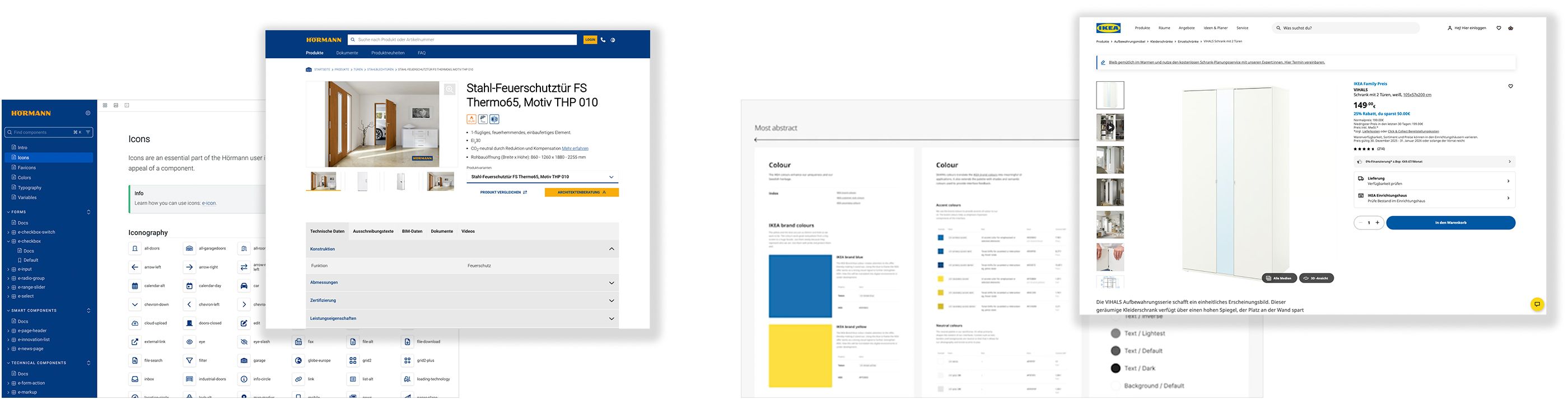
HÖRMANN operates a central product portal based on MACH with reusable building blocks that can be quickly expanded to include new features and countries.
IKEA relies on headless/MACH with a uniform design system across web, app, and in-store, thereby shortening release cycles.
Who is this interesting for?
B2B integrates faster with ERP, PIM, and CRM and reduces risks in security and legal audits. B2C can quickly launch new touchpoints such as apps, websites, and kiosks and improve campaign speed and performance.
Accessibility & inclusivity:
UX according to WCAG 2.2 and EAA
What is it and why is it important in 2026?
Accessibility ensures that digital offerings are usable for everyone. The European Accessibility Act has been in force since June 28, 2025, implemented in Germany by the Barrier-Free Accessibility Act. EN 301 549 and WCAG are decisive as proof of conformity. WCAG 2.2 is also recognized as ISO/IEC 40500:2025, which strengthens governance, procurement, and compliance.
Who is already using it?
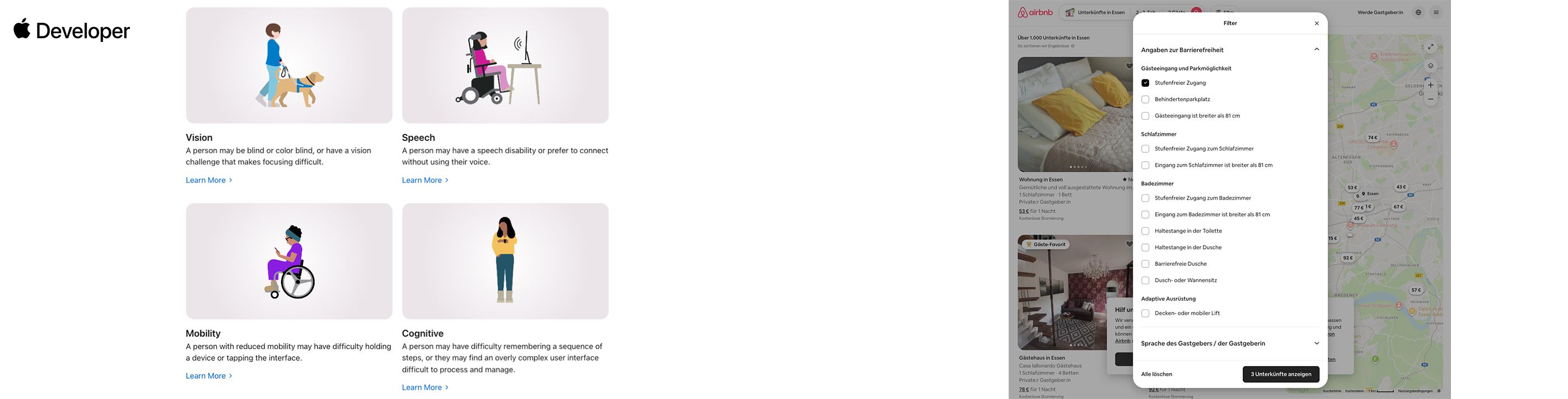
Apple has established accessibility as a product principle and provides comprehensive system features and developer guides.
Airbnb offers verified accessibility filters and a digital accessibility statement, which improves search and expectation management.
Who is this interesting for?
B2B benefits from verifiable standards and faster approvals in tenders and compliance processes. B2C reduces checkout abandonment, opens up target groups, and strengthens trust through visible, verifiable accessibility.
Sustainability Transparency:
Sustainability in the purchasing process
What is it and why is it important in 2026?
Sustainability Transparency makes the carbon footprint, materials, origin, reparability, and certificates visible throughout the purchasing process. In Europe, Digital Product Passports (DPP) provide information via QR codes on products for initial categories, which strengthens reporting and comparability. Visible, reliable sustainability data builds trust and supports decisions, especially for logistics- and packaging-intensive product ranges.
Who is already using it?
Apple publishes detailed environmental reports on the life cycle of each device and integrates them into product pages as a decision-making aid.
Logitech labels products with CO₂ labels on packaging and online, establishing transparent disclosure as a brand standard.
Who is this interesting for?
B2B strengthens tenders and Scope 3 reports with verifiable data on CO₂e, origin, and certificates. B2C increases trust and conversion when information on CO₂ and the supply chain is present and understandable on the product page, shopping cart, and checkout.
Usability testing with synthetic users
What is it and why is it important in 2026?
Synthetic users are AI-generated models that simulate representative usage profiles based on real interaction data. Teams can use them to test hypotheses, compare variants, and reduce risks at a very early stage. The method does not replace real tests, but complements them with speed and scalability, especially in international setups.
Who is already using it?
Publicly documented cases are still rare. But according to providers, brands such as Google, Apple, Asus, and Pepsi are using such services, probably for early prototypes and large variant spaces.
Who is this interesting for?
Ideal for B2B companies that want to scale digital products quickly and internationally. Synthetic users enable early validation, variant testing, and risk minimization even before real users come into play. Relevant for B2C brands that want to optimize customer experiences and accelerate innovation. Tests with synthetic users speed up A/B testing and hypothesis checking.
How companies can successfully implement UX trends in 2026
Don't just “do AI,” think first. Clearly identify the problem, define the goal, formulate a hypothesis, and establish criteria for success.
Here are 5 tips for implementation
- Define the target vision and KPIs: A clear outcome (e.g., −15 % checkout abandonment or +10 % reorder rate) focuses priorities.
- Clarify the data and architecture basis: Event and product data plus API-first and clean tracking are the foundation.
- Anchor design system and accessibility: WCAG 2.2 as a minimum; components are maintained as products, not as files.
- Compliance from the outset: AI labeling, consent, audit logs, and fairness monitoring belong in the definition of done.
- Start small, measure cleanly, scale: One pilot per trend, A/B testing, and a robust roadmap make testing faster and cheaper.
Implementing UX trends for 2026 with communicode
The UX trends described above show how much digital customer experiences will change in 2026 – technologically, regulatorily, and in terms of user expectations. For marketing, digital, and IT teams, this means that it is not enough to introduce individual AI features or new touchpoints. What is crucial is a holistic approach that brings together strategy, data, technology, UX, and compliance.
communicode supports medium-sized and large B2B and B2C companies in mastering this balancing act. Together with marketing, product, and IT managers, we translate trends such as conversational commerce, predictive UX, composable UX, and ethical AI into concrete, measurable use cases that fit the existing system landscape, regulatory requirements, and respective business goals.
We start with a compact kick-off: we analyze data and architecture setup, identify relevant UX levers along the customer journey, and prioritize use cases according to impact and feasibility. This results in a robust roadmap with clear KPIs and an accompanied pilot that provides early validation, measurable results, and serves as a scalable basis for further initiatives.
Author

Stephanie Ebbert
Stephanie is a UX Designer and Art Director with over 12 years of experience. At communicode, she designs and optimizes digital products such as websites, online shops or apps. She advises customers from the B2B as well as from the B2C area. Her passion for developing digital products is shaped by the human-centered design mindset. Stephanie is convinced that user testing, user interviews and psychology play a bigger role in good user experiences and successful shops than just beautiful design.