How to choose the right DAM system – step by step
DAM systems are the backbone of modern content architectures – but how do you choose the right DAM system? Digital asset management (DAM) is now more than just an archive for images and videos: for B2B companies with complex product portfolios and numerous channels, choosing the right system is crucial, but often complex and risky.
communicode has been helping companies choose the right DAM system for years, with an open approach to technology. Our recipe for success: we understand the key processes of each company and identify the DAM solutions that provide truly efficient support. From gathering requirements to making informed decisions, we ensure that companies can design their content strategy securely, efficiently, and sustainably.
Why choosing a DAM system is so challenging today
DAM as a central component of digital processes
In modern companies, content is a strategic success factor. Product images, videos, marketing materials, technical documents, and social media assets must be efficiently created, managed, distributed, and updated. A DAM system acts as a central platform that structures and versions these assets and makes them available for various systems and channels.
Growing demands due to omnichannel, AI, and automation
The demands on DAM systems are constantly growing:
- consistent content for omnichannel strategies (web, e-commerce, print, and social media)
- integrations with PIM, ERP, CMS, and marketing automation systems
- AI-supported functions such as automatic tagging, image recognition, or content analysis
- high requirements for security, scalability, and performance
In addition to market developments, individual organizational requirements are particularly crucial: e.g., complex approval and acceptance workflows involving multiple departments, country-specific approval levels, or external service providers, or the question of how flexibly roles, rights, and processes can be mapped in the DAM. Not every system is suitable for every organization.
At the same time, the market is fragmented: there are specialized DAM providers, modular platforms, and comprehensive content suites. Without a clear process for selecting a DAM system, there is a risk of making the wrong decision, which can result in high follow-up costs.
Why a structured DAM selection process is crucial
Many companies select their DAM system based on individual demos or feature lists. While this approach allows for comparison on paper, it evaluates functions in isolation without consistently aligning them with individual processes, organizational structures, and system landscapes. In practice, this often leads to:
- low user acceptance
- high customization and integration costs
- hidden costs
- limited future viability
The key message therefore is: A structured DAM system selection process reduces risks and creates a robust basis for decision-making. Our experience from over 20 years of e-business consulting, numerous DAM selection processes, and just as many projects in which the previous selection had to be corrected shows that excellence in DAM selection does not come from the “best list,” but from the best understanding.
Stakeholder management as a success factor
The DAM selection process offers an excellent opportunity for change and stakeholder management. Companies can involve stakeholders at an early stage, provide transparent information about goals and requirements, and thus ensure later acceptance and support for the system. This not only makes the selection process more efficient, but also lays the foundation for successful implementation.
The 6 steps to making the right DAM decision
We have developed a structured, requirements-driven evaluation process. It does not start with the tools, but with the specific needs of our customers. This approach is only possible because we always consider DAM in the context of related systems and disciplines such as PIM, commerce, CMS, and marketing automation.
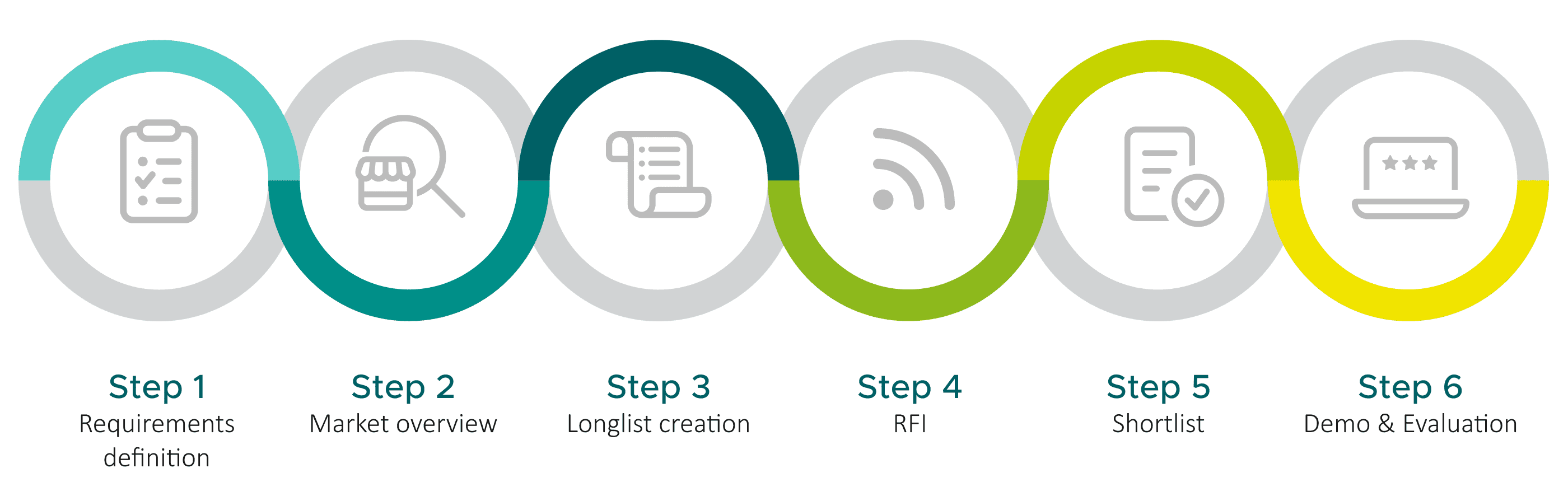
Step 1: Defining requirements – the basis for any DAM system selection
The selection process does not begin with the market, but with your own company. Requirements are jointly developed in an initial meeting or workshop:
- Which processes should the DAM support?
- Which departments will work with the system?
- Which asset types (images, videos, documents, 3D, etc.) need to be managed?
- Which integrations are necessary (e.g., PIM, ERP, CMS, e-commerce)?
Important: This phase is not about defining every single feature in detail. The goal is rather to identify the key issues that are most important to the customer – such as integration capability, automation, usability, or international scalability. These key issues form the guidelines for the entire selection process: They determine which providers are shortlisted, how benchmarking is carried out, and how functions are later evaluated and weighted.
We work with the information supply chain in our workshops because it makes requirements visible in a process-oriented, context-related, and user-centered way, rather than querying them abstractly. This focus is not a theoretical best practice approach, but the result of our more than 20 years of project experience.
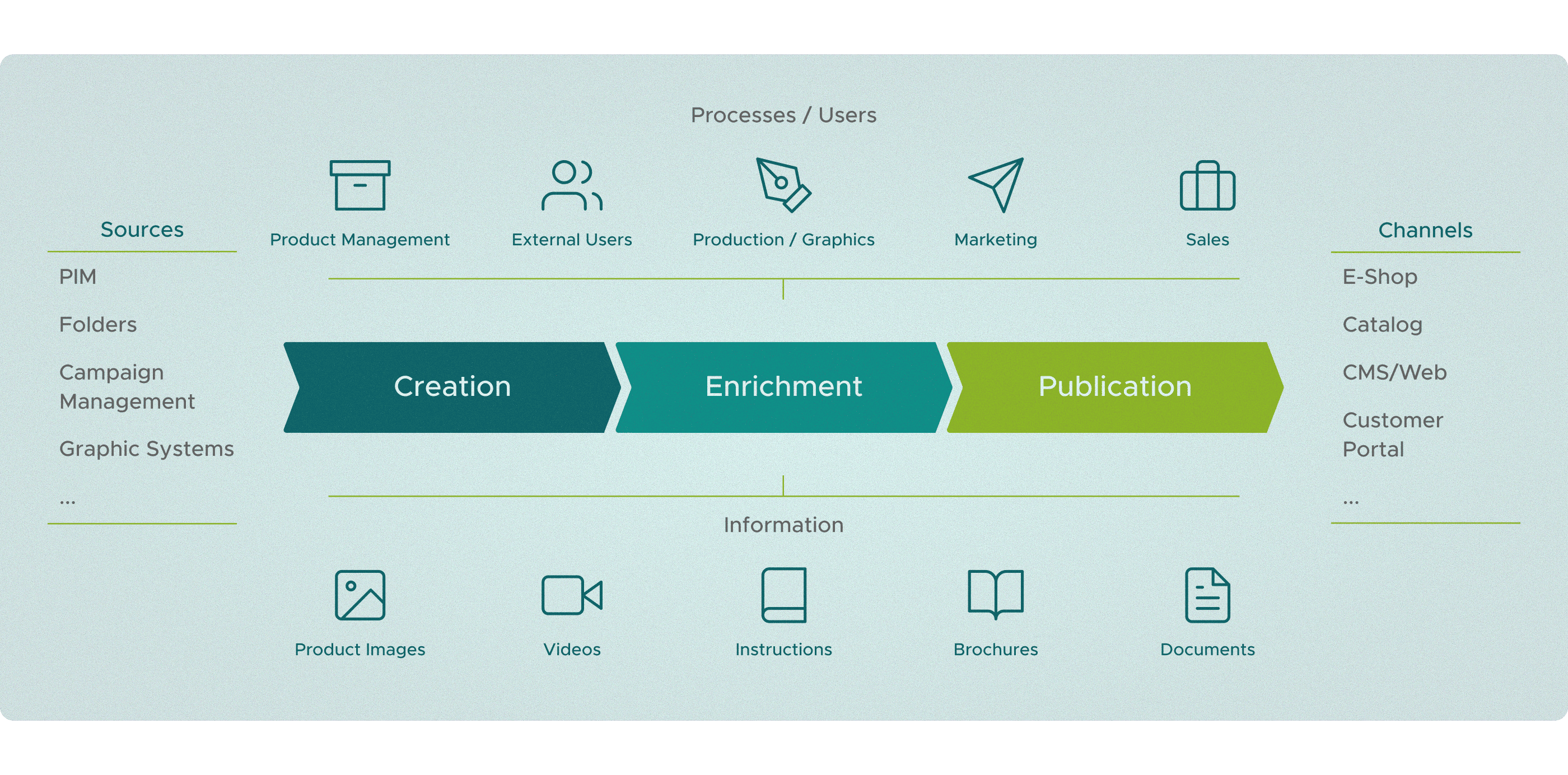
Typical stumbling blocks in this phase
- too much focus on technology without involving the specialist departments
- unclear objectives (“We just need a DAM.”)
- confusion between desired features and real must-haves
- a focus too strong on features
In this early phase, many companies assume that the more features a DAM system offers, the better it is. In practice, however, this approach often proves to be counterproductive. Different DAM systems deliberately focus on different areas – such as media production, distribution, integrations, or automation. The decisive factor is therefore not the maximum range of functions, but how well a system supports the relevant processes and increases process efficiency in everyday work.
A structured workshop provides clarity and alignment here.
Step 2: Market overview & manufacturer neutrality
Based on the defined key topics, we then take a look at the market. Manufacturer-neutral advice is crucial here. Our goal is not to sell a specific system, but to identify objectively suitable solutions.
A neutral market overview takes into account:
- different technological approaches (best-of-breed vs. suite)
- maturity levels of providers
- industry focus areas
- future strategies of manufacturers
This creates a realistic picture of the available options, free from the marketing promises of individual providers.
Step 3: Longlist – Systematic narrowing down
The next step is to create a longlist. This includes all providers who fundamentally meet the defined core criteria and are convincing in the key areas.
Typical criteria for the longlist are:
- technological basis and architecture
- integration capability (e.g., APIs, standard connectors)
- basic range of functions
- scalability and security
The longlist is deliberately kept relatively broad. The aim is not to exclude relevant options prematurely, but at the same time to make a structured pre-selection.
Step 4: RFI – Structured Information Gathering
A key component of the selection process is the RFI (Request for Information). Based on the requirements and key topics, providers receive a clearly structured questionnaire.
Typical RFI topics include:
- technology and architecture
- range of functions along the key topics
- security and compliance aspects
- integrations and expandability
- operating models (cloud, on-premises, hybrid)
The RFI enables an objective comparison on a uniform basis and reduces dependence on marketing materials. It is important that the evaluation and weighting of the RFI responses is also carried out consistently in line with the previously defined key topics. This ensures that providers are not evaluated purely on the basis of their range of functions, but rather on how well they perform in the areas that are crucial for the company. The results form the basis for the next selection stage.
The RFI is usually created by communicode in close consultation with the customer.
Step 5: Shortlist & Pitch Briefing
Based on the RFI results, a shortlist of usually three to five providers is created. These providers are invited to a pitch.
A professional pitch briefing is crucial here:
- clear objectives for the demo
- real use cases from everyday business life
- focus on the defined key topics
This ensures that the demos are comparable and that not only standard functions are shown. Providers must demonstrate how well their solution fits the specific requirements.
Step 6: Demo & evaluation matrix – informed decision
The final decision is not made on gut feeling, but on the basis of an evaluation matrix that is logically and consistently derived from the previous steps. The central basis for this are the key topics defined in step 1, which are already reflected in the weighting in the RFI (step 4).
The evaluation matrix maps all relevant criteria and weights them according to their strategic importance. This ensures that aspects that are crucial for the specific use case, such as integration capability, process support, or scalability, have a greater influence on the overall evaluation than less relevant functions.
Typical evaluation criteria are:
- range of functions (evaluated according to key topics)
- usability and user experience
- integration capability into the existing system landscape
- performance and security
- cost model (license, operation, extensions)
- support, roadmap, and further development
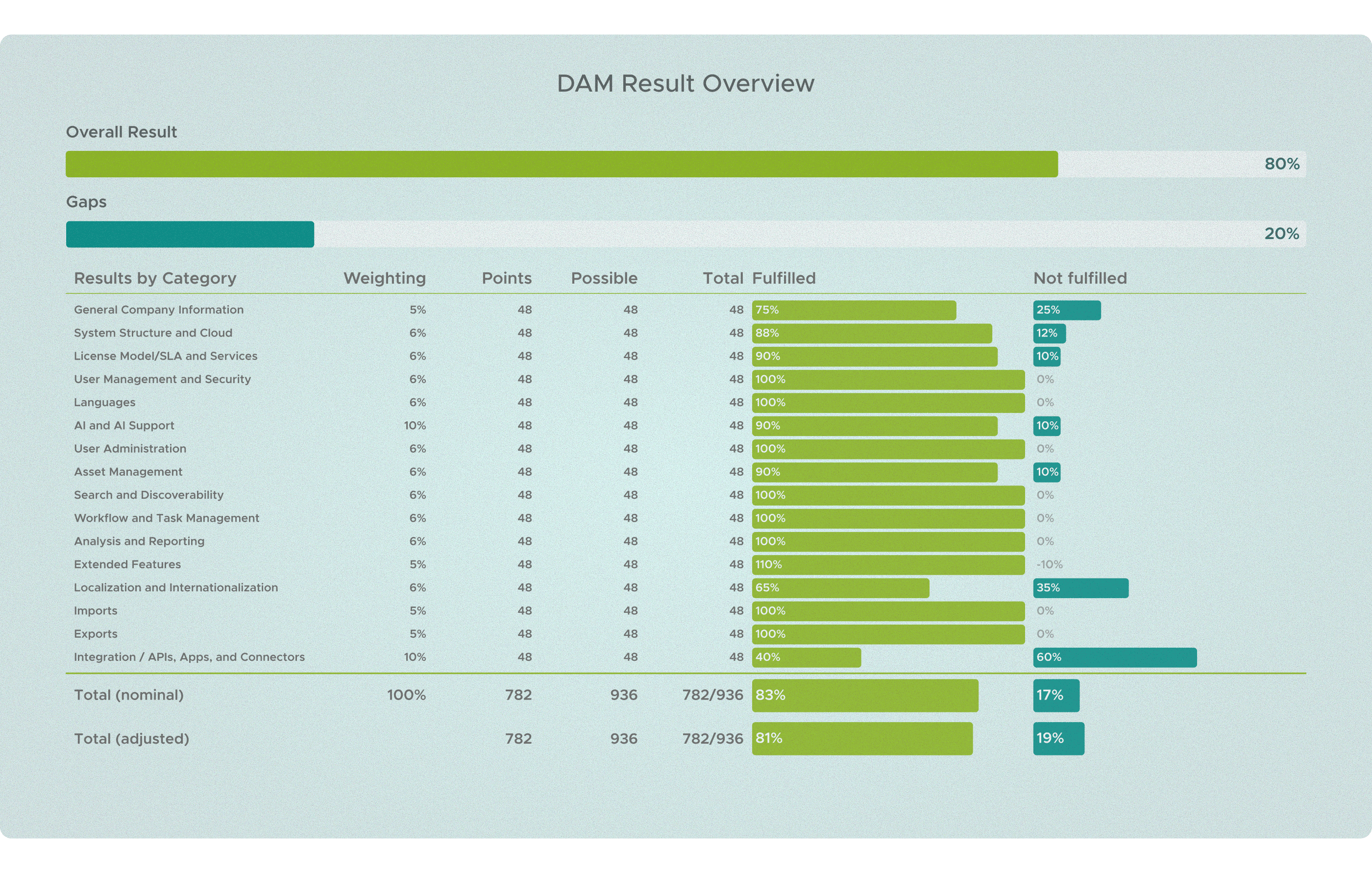
This consistent integration of requirements definition, RFI, and evaluation matrix results in a stringent, traceable decision-making process that creates transparency and increases acceptance of the decision – even among management and IT.
communicode supports this process with an efficient evaluation matrix. All participants in a vendor workshop can easily fill in the criteria “on the fly.” This results in an overall evaluation that not only takes objective system features into account, but also incorporates the perspectives of all stakeholders involved. This makes the decision more informed and increases acceptance within the company.
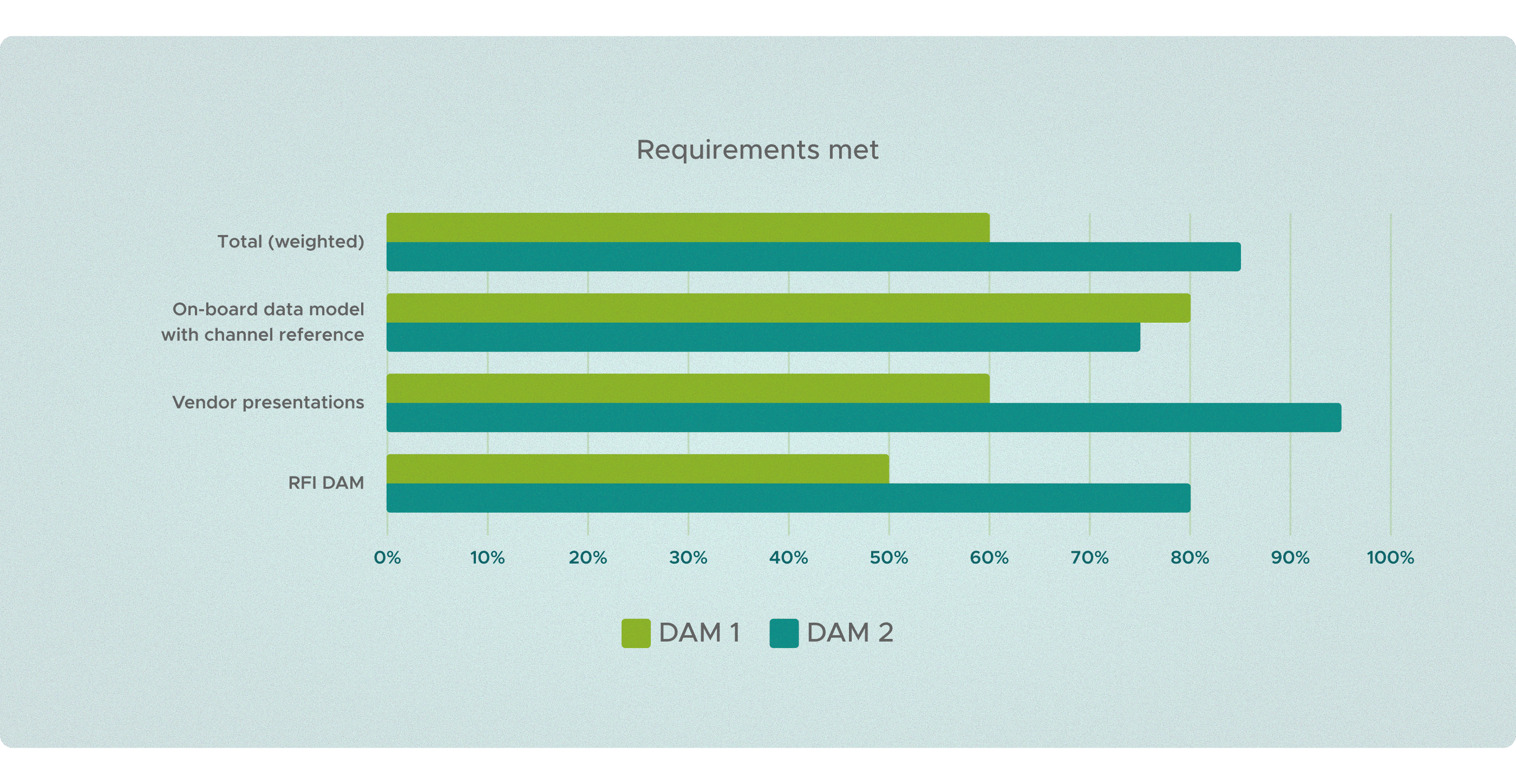
Accelerated process: The alternative when time is of the essence
Not every company can or wants to go through a comprehensive selection process. For these cases, there is an accelerated process.
The procedure:
- compact requirements workshop
- preselection of 2–3 suitable systems by the consultant
- presentation of the systems
- joint evaluation using a simplified matrix
The result is a well-founded recommendation in significantly less time. This is ideal when requirements are clear and decision-making pressure is high.
Learn more about our quick way to find the right DAM system:
Conclusion: Structure saves time, money, and stress
Selecting a DAM system is a strategic decision with long-term implications. A structured, transparent process:
- reduces risks
- increases the quality of the decision
- ensures internal acceptance
- creates a sustainable basis for content and digital strategies
Our experience at communicode shows: In particular, the early involvement of key stakeholders in the selection and decision-making process has a positive influence on the acceptance of the subsequent project and the system itself.
Our appeal: Invest time in making the right choice – it will pay off many times over. We are happy to guide you through the entire process.
FAQ – Frequently asked questions about DAM system selection
Author

Michael Ochtrop
Michael develops technical and procedural concepts for the introduction of software solutions in organizations. From communicode's 20-year company history, he is familiar with almost every scenario in the data management context. His concern in the customer project is to make everyone involved convinced users and thus make the company more successful. After all, software only leads to improvements in conjunction with people and processes.