AI transformation: Great Opportunities require a clear direction


What does AI transformation mean?
AI transformation refers to the transformation of a company through the use of artificial intelligence. In addition to new tools, it also encompasses processes, roles, responsibilities, and competencies. It is successful when the use of AI contributes to a clear business objective and results in a noticeable improvement compared to before.
AI in the workplace is not an end in itself
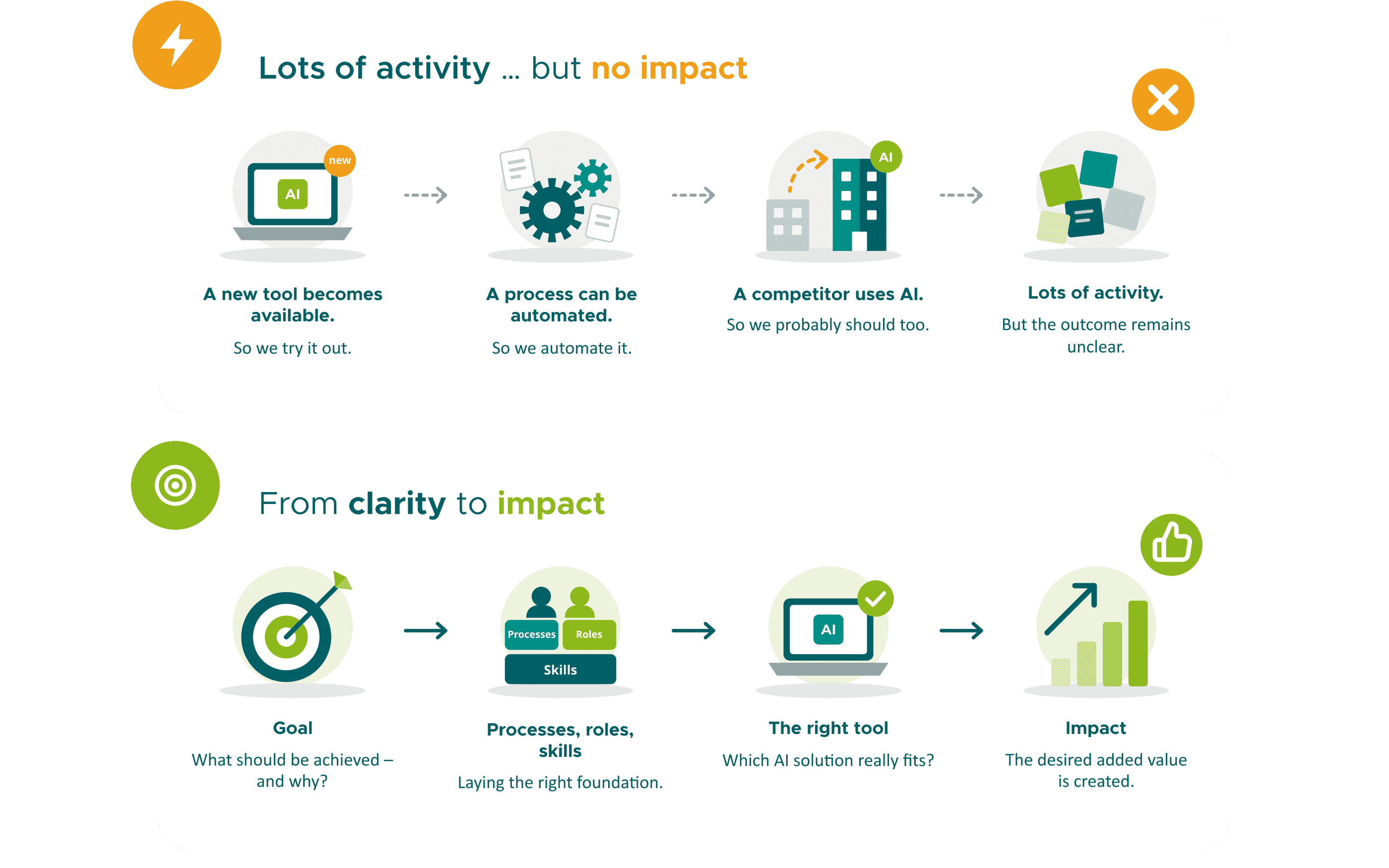
The temptation is strong. A new tool becomes available, so it gets tried out. A process can be automated, so it gets automated. A competitor is using AI, so we probably should too.
This quickly leads to activity, but by no means to results. Many AI initiatives without a clear direction do not automatically lead to transformation. If anything, they result in digitized AI chaos.
That’s why, before focusing on the technology, we need clarity about the goal: What do we want to achieve? Why is it relevant? And what should be better afterward than before? That sounds trivial. But it isn’t.
Digital transformation changes work, not just technology
What we’ve learned from PIM and e-commerce projects applies even more so to AI. A PIM system is implemented, a new online store goes live, and processes are digitized. Technically, all of this can work – and yet the project still falls short of its economic potential.
That’s because technology brings about changes in processes, roles, responsibilities, competencies, and collaboration. It changes who provides information, who makes decisions, and who bears responsibility. Established routines are being disrupted.
Technology is only part of the change. The organization must translate it into tangible results.
Why AI exacerbates this challenge
With AI, this challenge becomes even greater. Beyond processes, it is increasingly transforming knowledge work, decision-making processes, and role models. This brings the question of how people will work in the future even more into focus.
Change management in AI: Now it’s about people
This became clear at the INQA network meeting. Whether an AI implementation succeeds depends on two groups: executives and employees.
Executives as Enablers
Executive teams must take a stand, make investments, evaluate new business models, and maintain an overview all at the same time. In this process, leadership itself can become a bottleneck. The reason is rarely resistance; more often than not, it’s a lack of a clear stance and prioritization.
The Gallup Engagement Index Germany 2025 shows just how much is at stake here. When leaders use AI themselves, clearly endorse it, and explain its concrete benefits, employees feel better prepared. They find AI tools more helpful and use them more frequently. So far, however, this rarely happens: Only 21 percent of respondents whose companies use AI strongly agree that their leader actively supports its use.
This presents a major opportunity. Leaders can make a difference in three roles:
As learners:
They try things out for themselves and understand what AI can and cannot do.
As enablers:
They create spaces where teams can experiment without fear of making mistakes.
As stewards:
They set clear priorities and establish binding guidelines for the meaningful use of AI.
The key lever, therefore, lies less in the technology itself than in leadership, empowerment, and clarity about the benefits. Only then will AI move from theoretical potential to a real working tool.
Employees: Between opportunity and uncertainty
For employees, too, AI has long since ceased to be an abstract technology of the future. It’s about specific tasks, skills, and roles—and about their own professional futures. Thus, what began as a technological issue becomes a matter of security, identity, and the future.
AI strategy for SMEs: Guidance before the first use case
What companies need now is neither AI euphoria for its own sake nor outright rejection. They need guidance: a clear stance on what they want to achieve with AI, what role people play in this, and how work can be meaningfully transformed.
This includes a willingness to critically examine existing practices while consciously deciding what should be preserved. Not everything that is technically possible is also sensible. And not everything that can be automated should be automated.
Five key questions before introducing AI into your company
- What goal do we want to achieve, and why is it relevant?
- What should be better afterward than before?
- Which processes, roles, and responsibilities will change?
- What skills do our employees need?
- What do we consciously want to preserve?
No tool can answer these questions.
Organizational development as the core of successful transformation
For over 20 years, I have been supporting small and medium-sized enterprises (SMEs) through change processes. Whether it’s digital transformation, leadership, collaboration, or organizational development – ultimately, it always comes down to how people work together to achieve collective effectiveness.
Today, I bring this experience to communicode. As an authorized INQA Coach, I also support other companies through precisely these change processes.
The focus is on creating clarity together: regarding goals, business processes, collaboration, and roles – and addressing the question of what kind of change actually makes sense for each company. The next technology comes after that.
This applies to the implementation of a PIM system, the development of an online store, and now also to AI. Technology creates possibilities. Impact only arises when people, processes, and the organization align.
We at communicode are also exploring these questions
We’re having this discussion internally as well. We’re not just focusing on the technological possibilities that are emerging; we’re also asking what they mean for our own positioning, our collaboration, and our expertise.
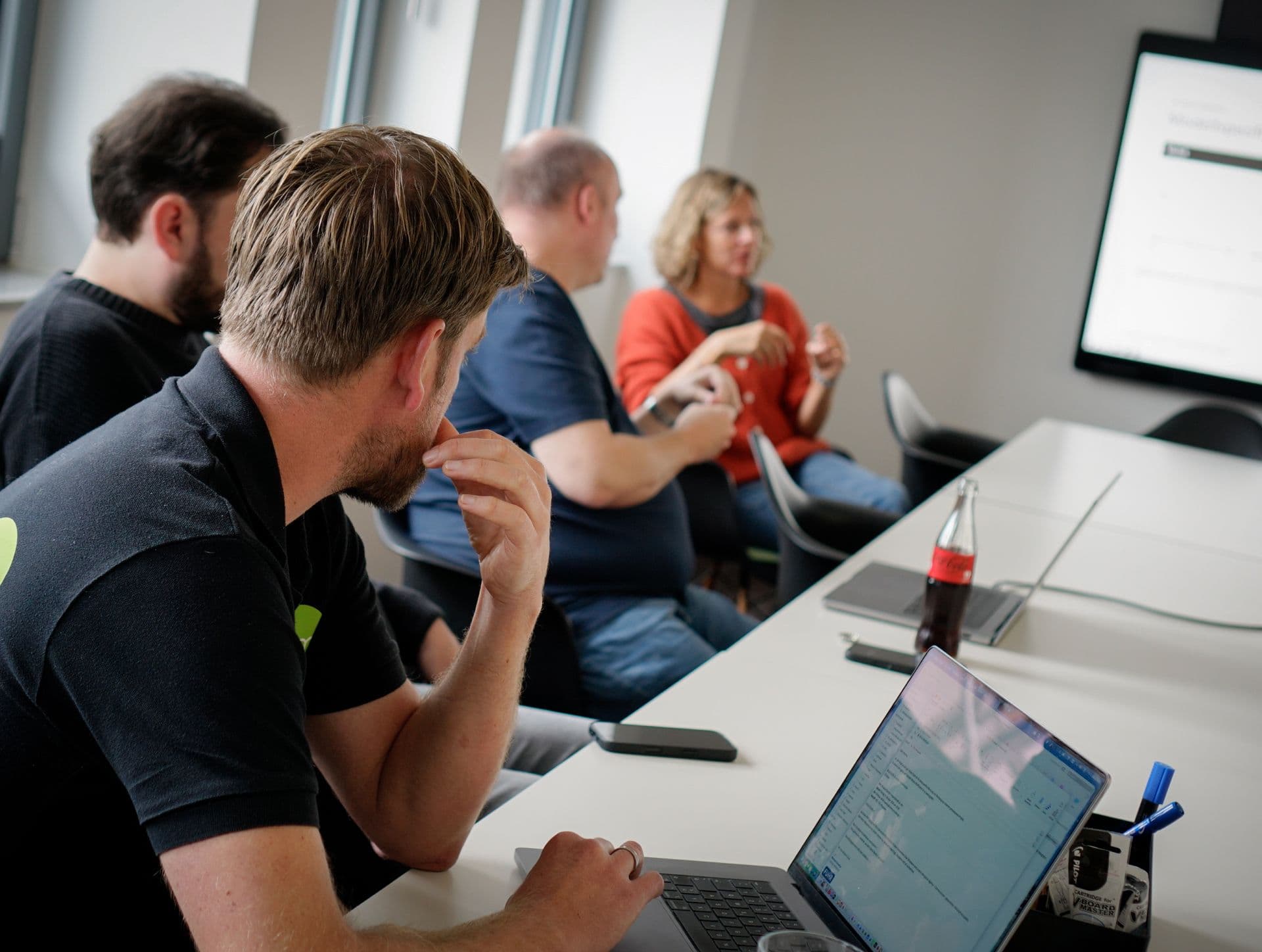
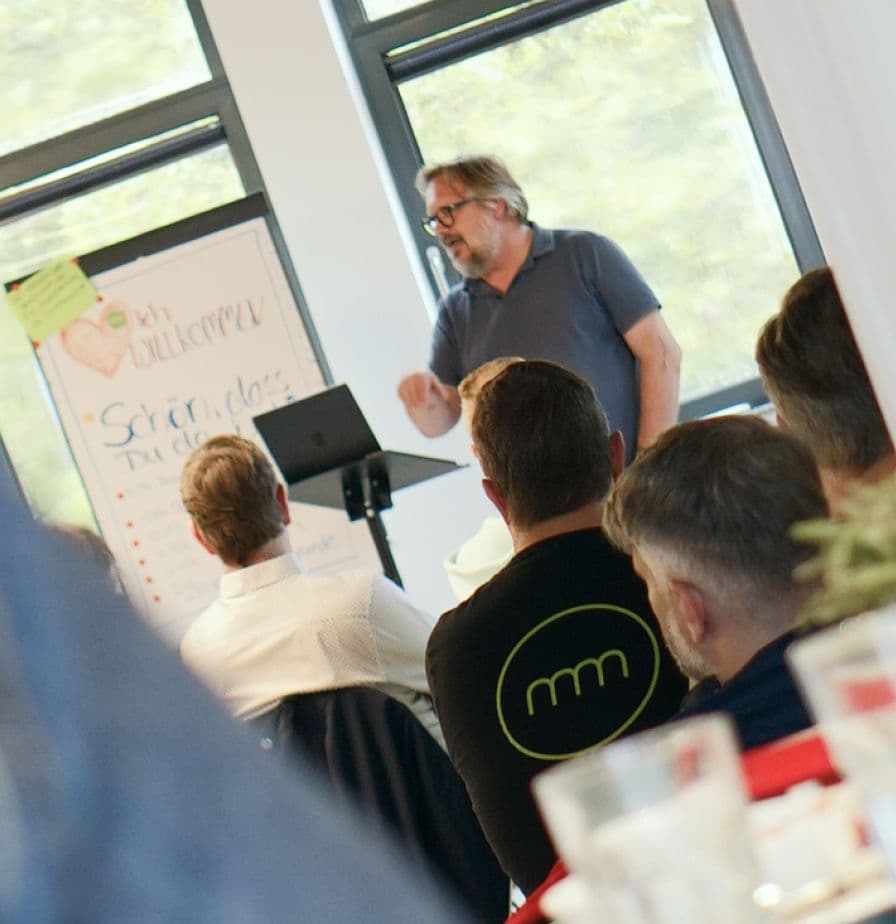
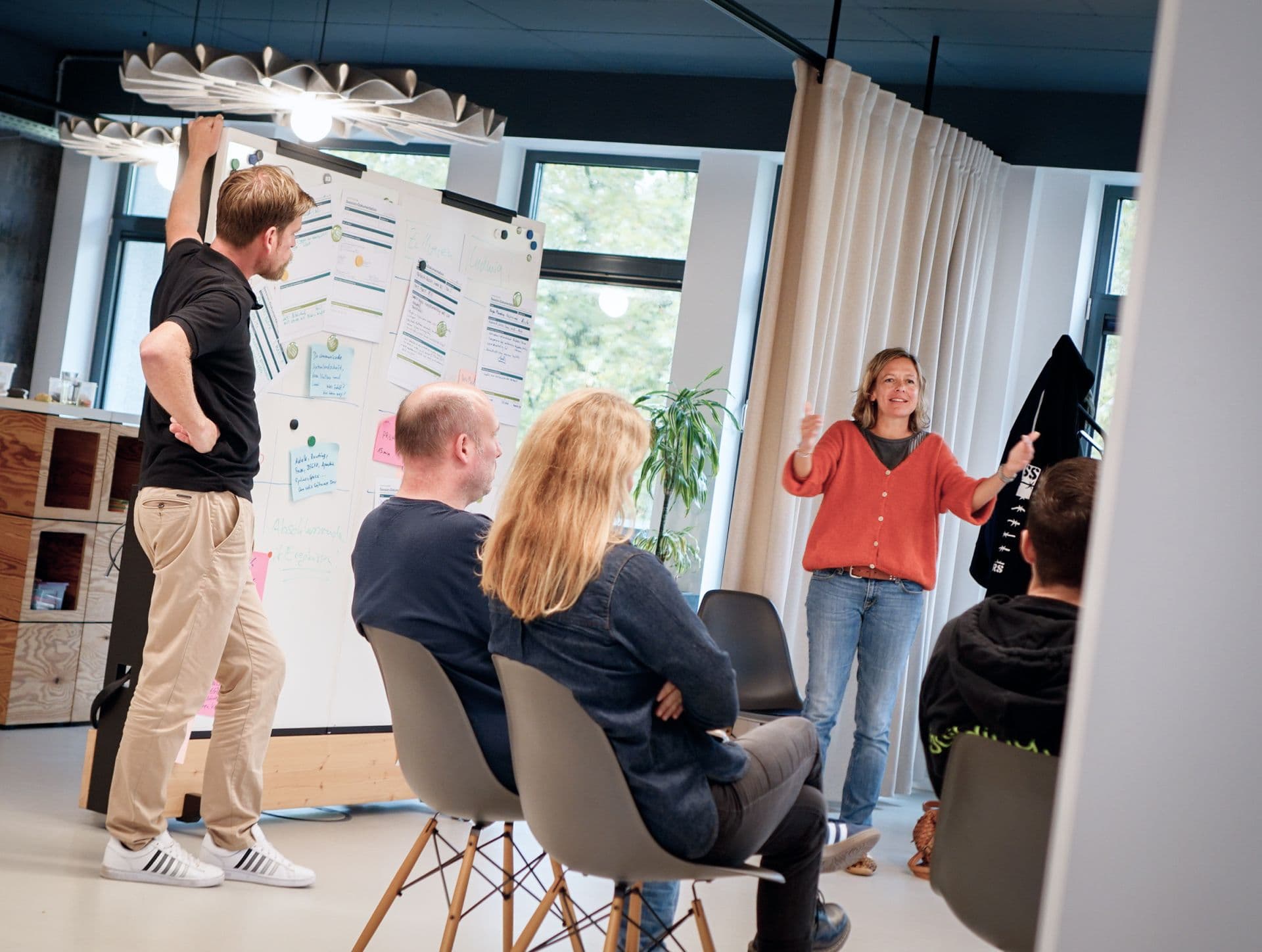
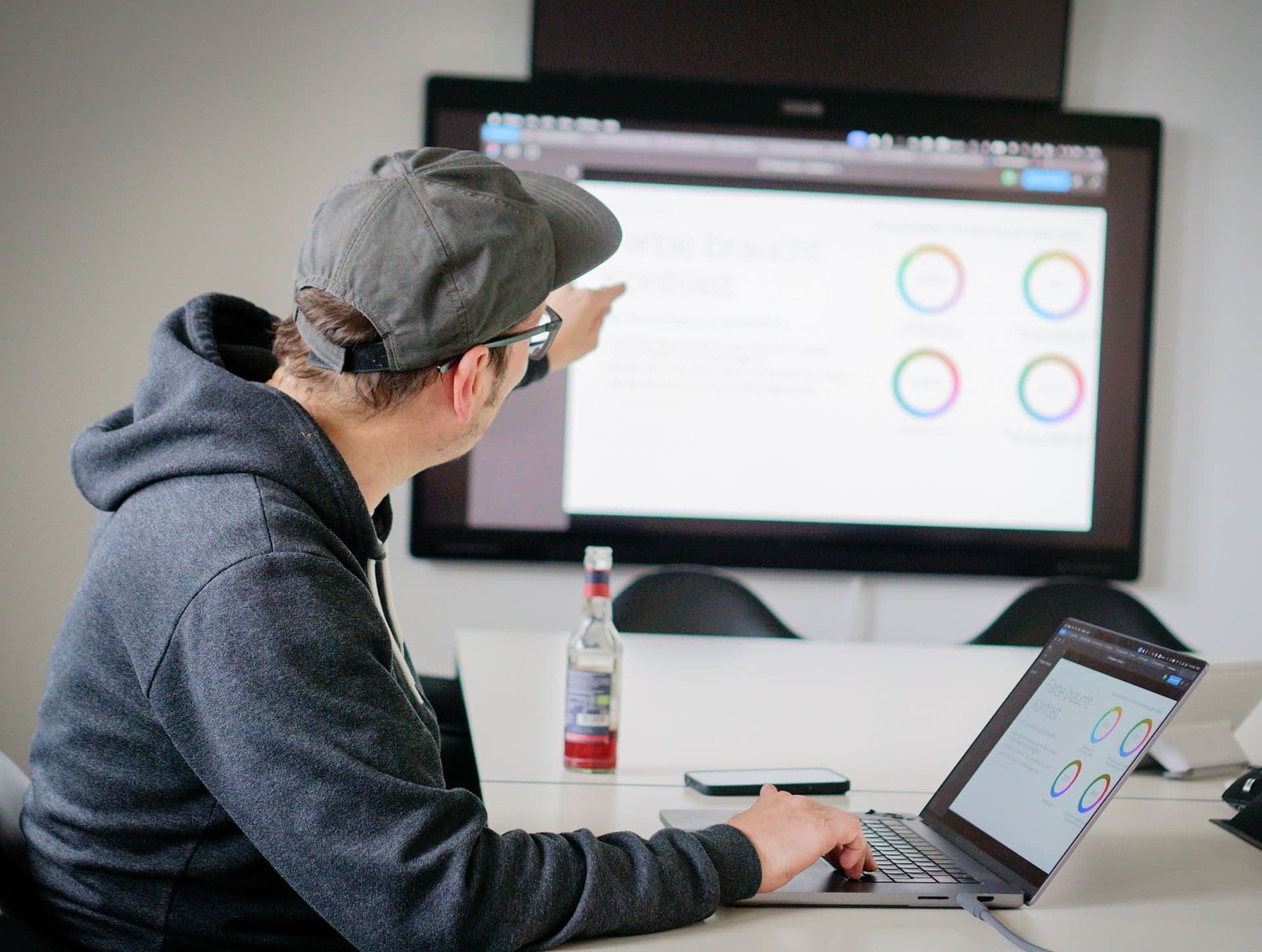
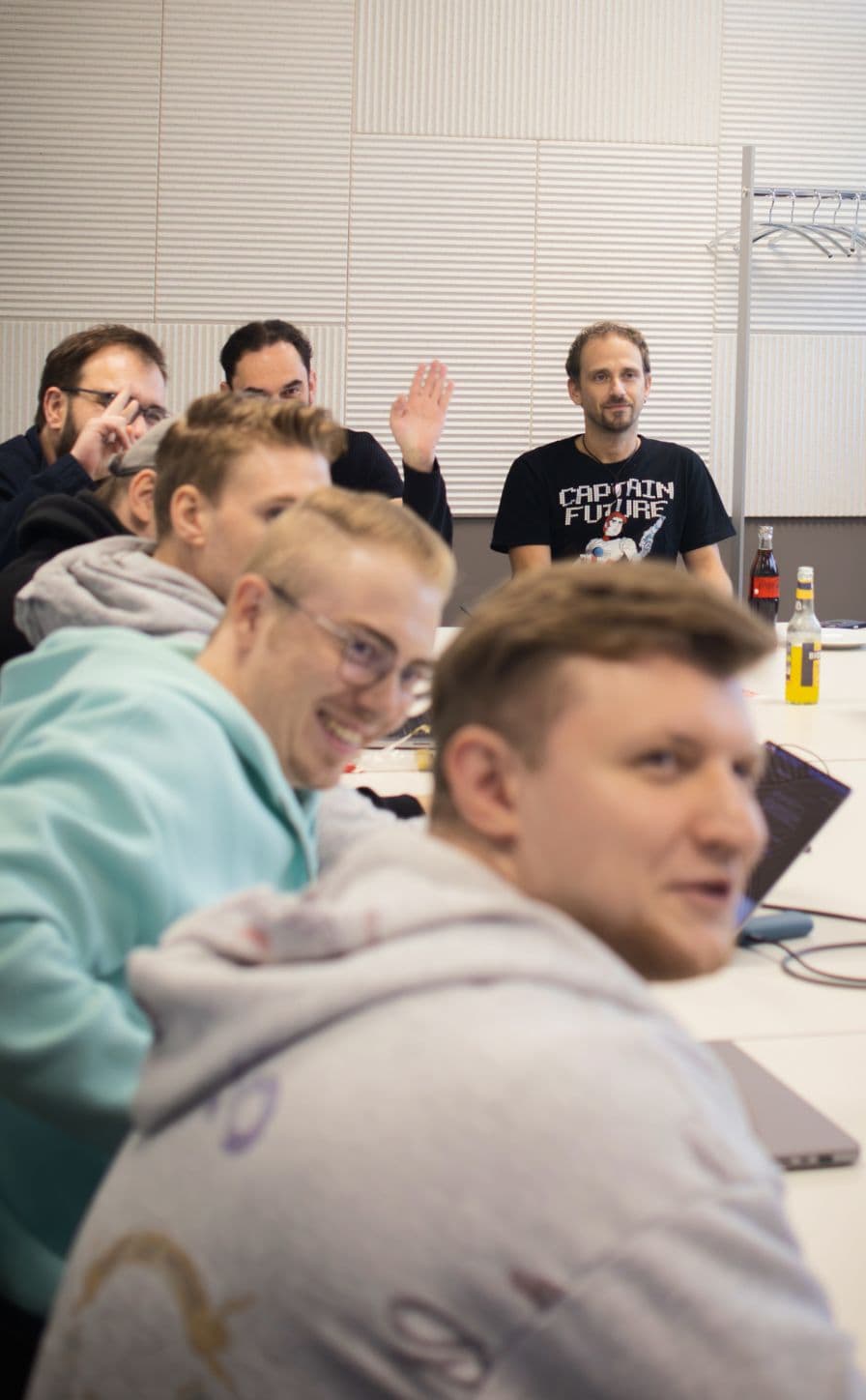
One example is our internal Barcamp: it features an opening presentation from management, contributions from employees, and plenty of space for discussion. Formats like this are especially important right now. Strategy papers alone don’t change much. Change happens through dialogue, when different perspectives come together and people can contribute their ideas and help shape the future.
Perhaps this is particularly valuable in an increasingly digital work environment: coming together in person to find common ground.


Conclusion: The first step is a step back
Before you start looking for the next AI solution, it’s worth taking a step back: What do you actually want to achieve, and why?
This isn’t a detour. It’s the beginning.
An AI transformation succeeds when the goal, organization, and technology align. Those who first clarify what should be improved, which roles will change, and what will be deliberately retained can choose the right tools with a clear vision. And you’ll avoid initiatives that generate a lot of activity but achieve little.
At communicode, we’re happy to advise you on answering these questions for your company: from defining your goals and involving your employees to determining which solutions are truly right for you.
FAQ – Frequently asked questions about AI transformation

Mara Erlinghagen
Mara ist Director People & Culture bei communicode und gestaltet dort seit sieben Jahren die Themen rund um Menschen, Zusammenarbeit und Organisationsentwicklung. Als Sozialwissenschaftlerin begleitet sie seit über 20 Jahren organisationalen Wandel, auch als agile Coachin und Konfliktmoderatorin in unterschiedlichen Branchen. Für sie ist gute Zusammenarbeit kein Zufall: Sie entsteht durch klare Strukturen, offene Kommunikation und echte Beteiligung. Denn nichts bringt ein Unternehmen weiter als Menschen, die Entscheidungen gemeinsam in die Umsetzung bringen!