Coffee, colleagues, and AI: The Open Space at communicode
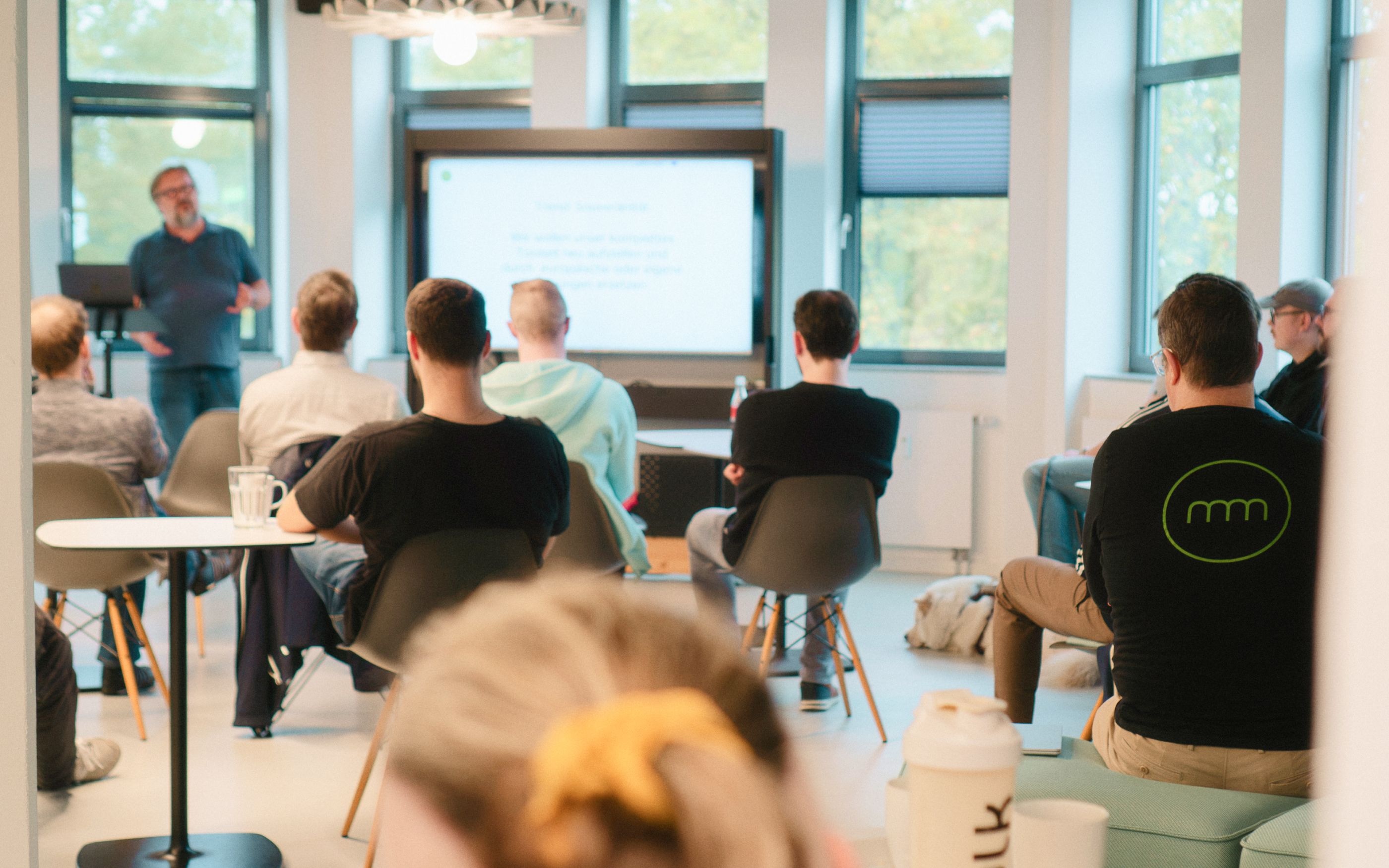
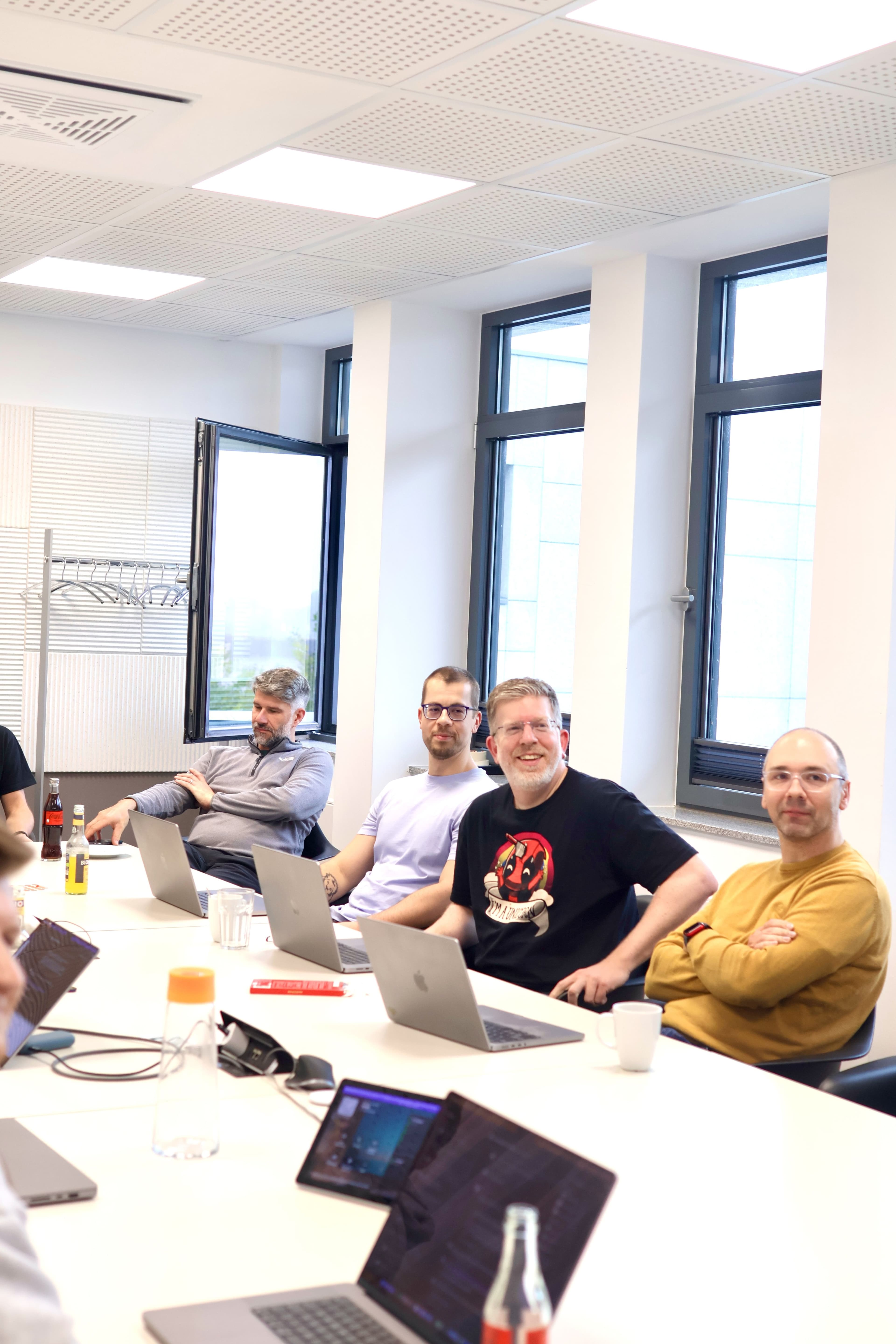
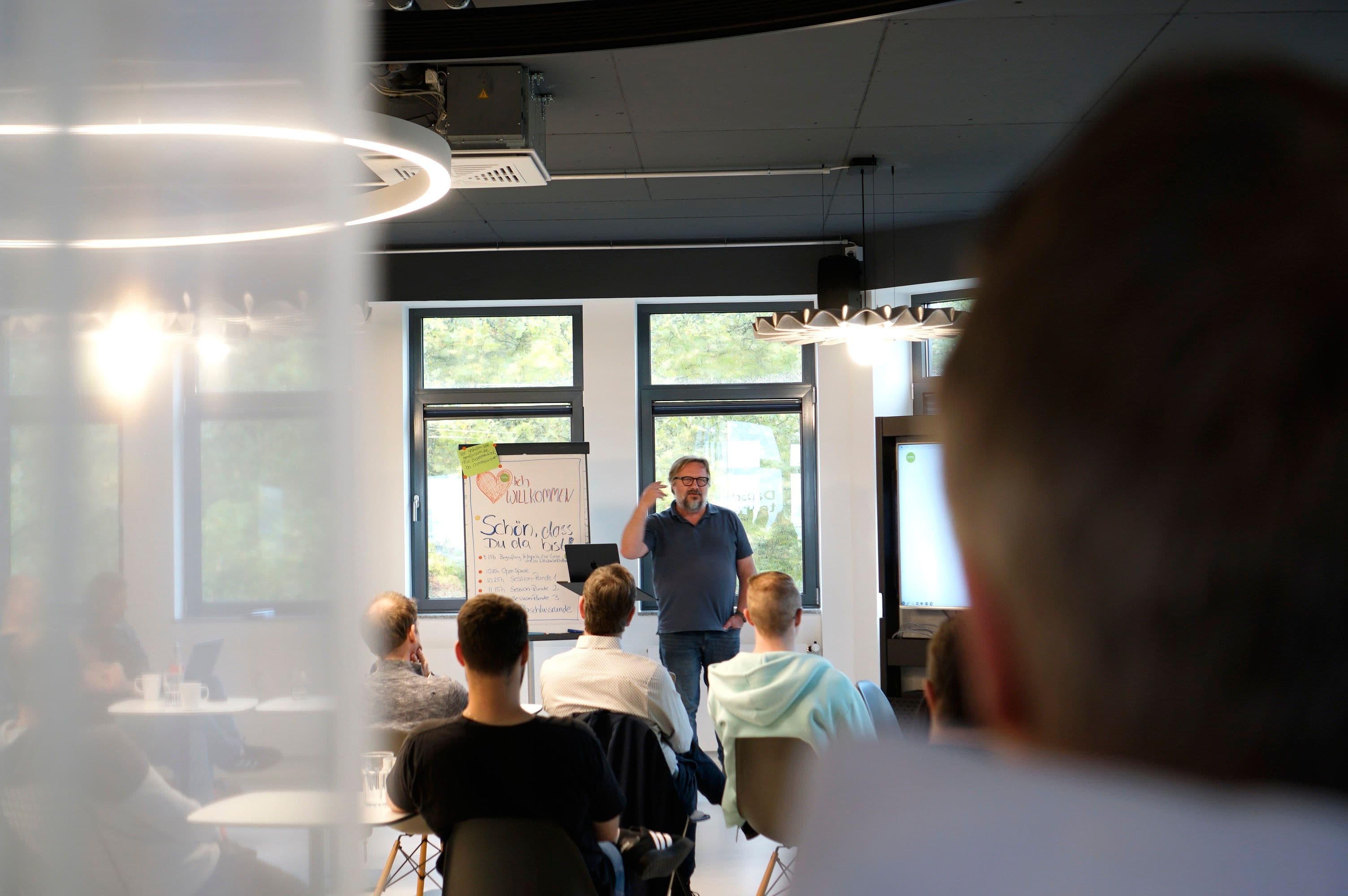
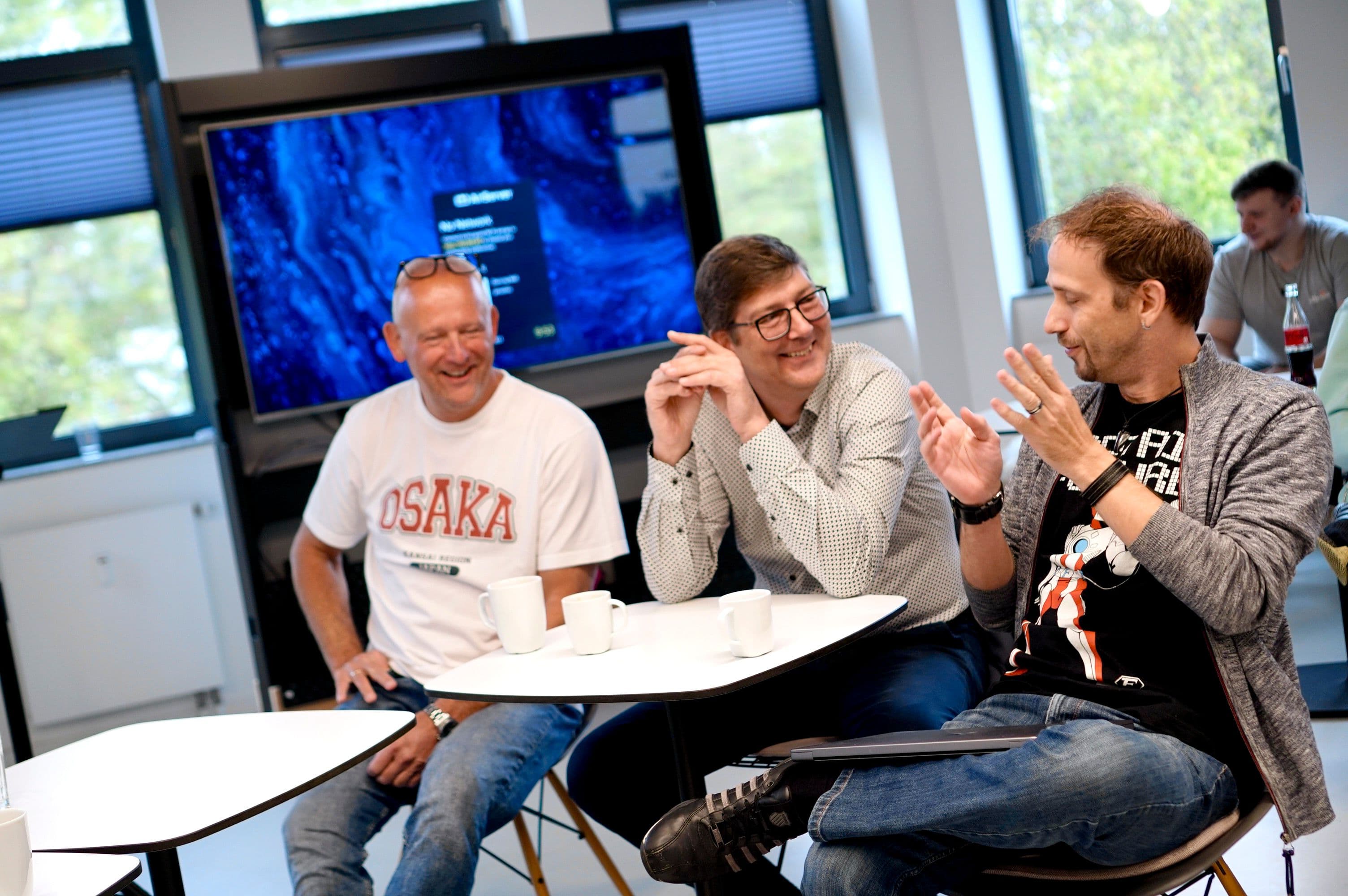
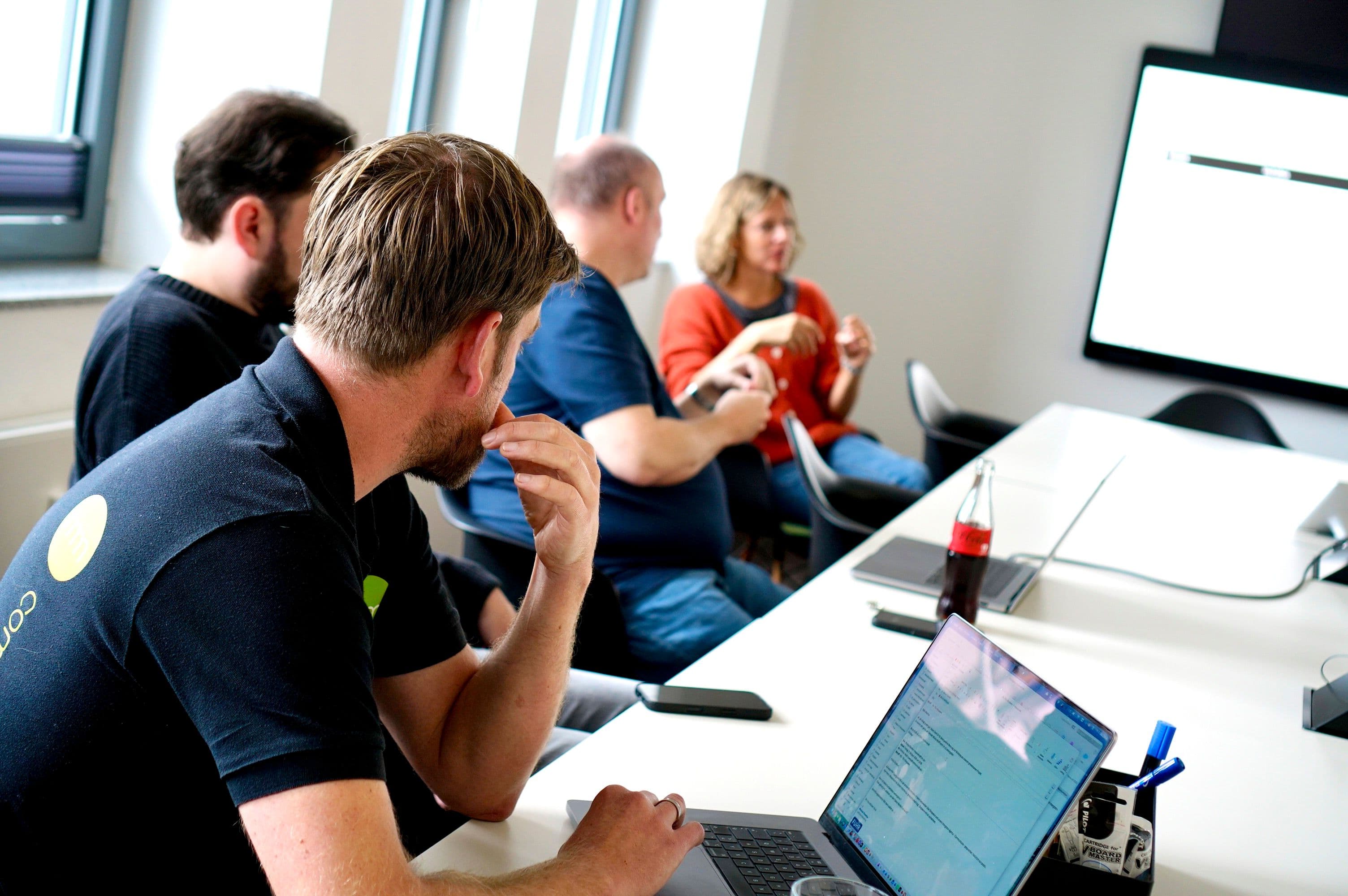
These were the questions at the heart of our internal Open Space session in October 2026. Over the course of a morning, colleagues from development, design, project management, and marketing brought up their own topics, shared experiences, and openly acknowledged where they felt uncertain. The most important insight: The impact of AI in our day-to-day work depends on shared knowledge, transparent processes, and clear guidelines for collaboration between humans and AI.
Open Space – A format where topics come from the team
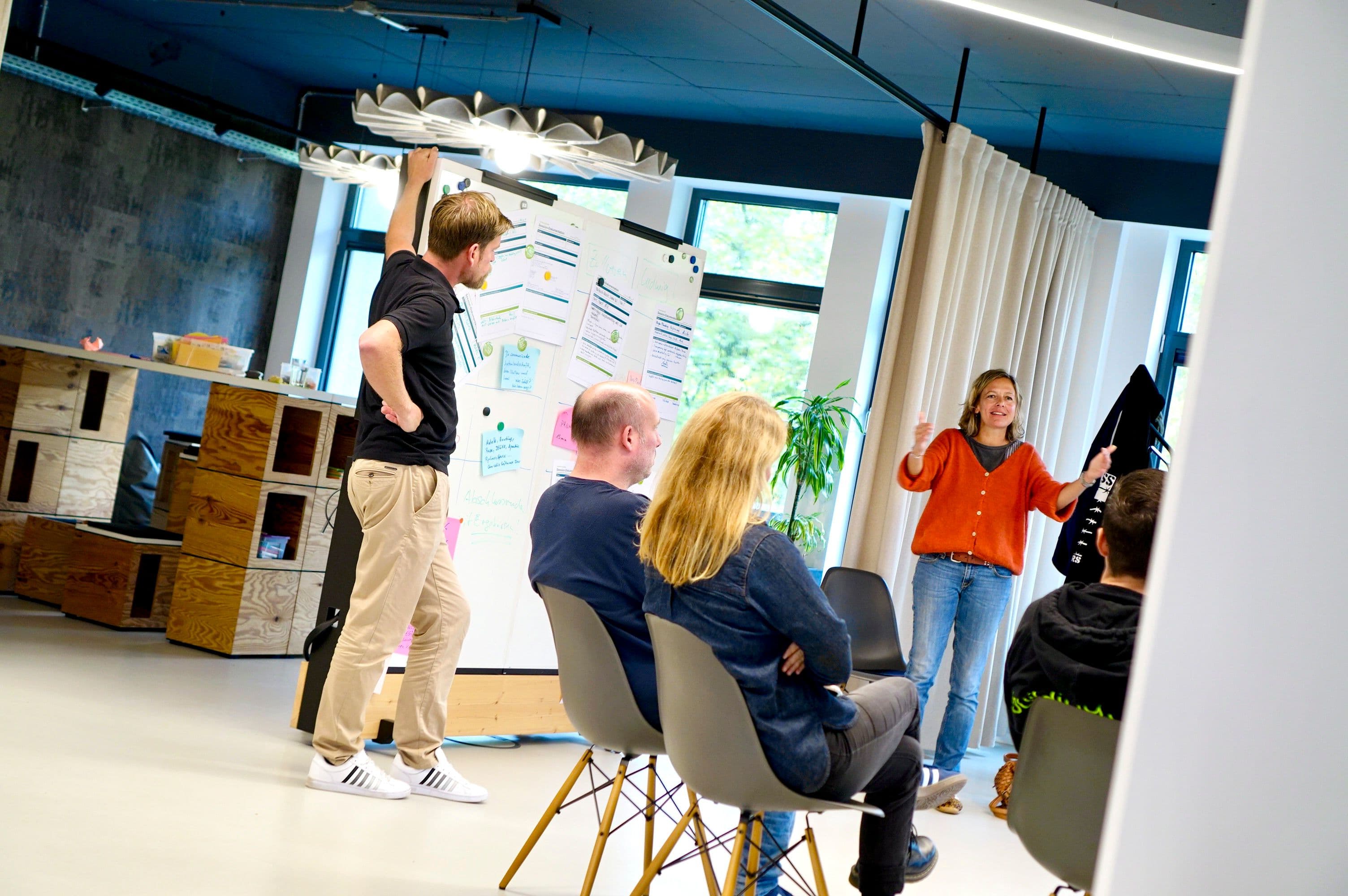
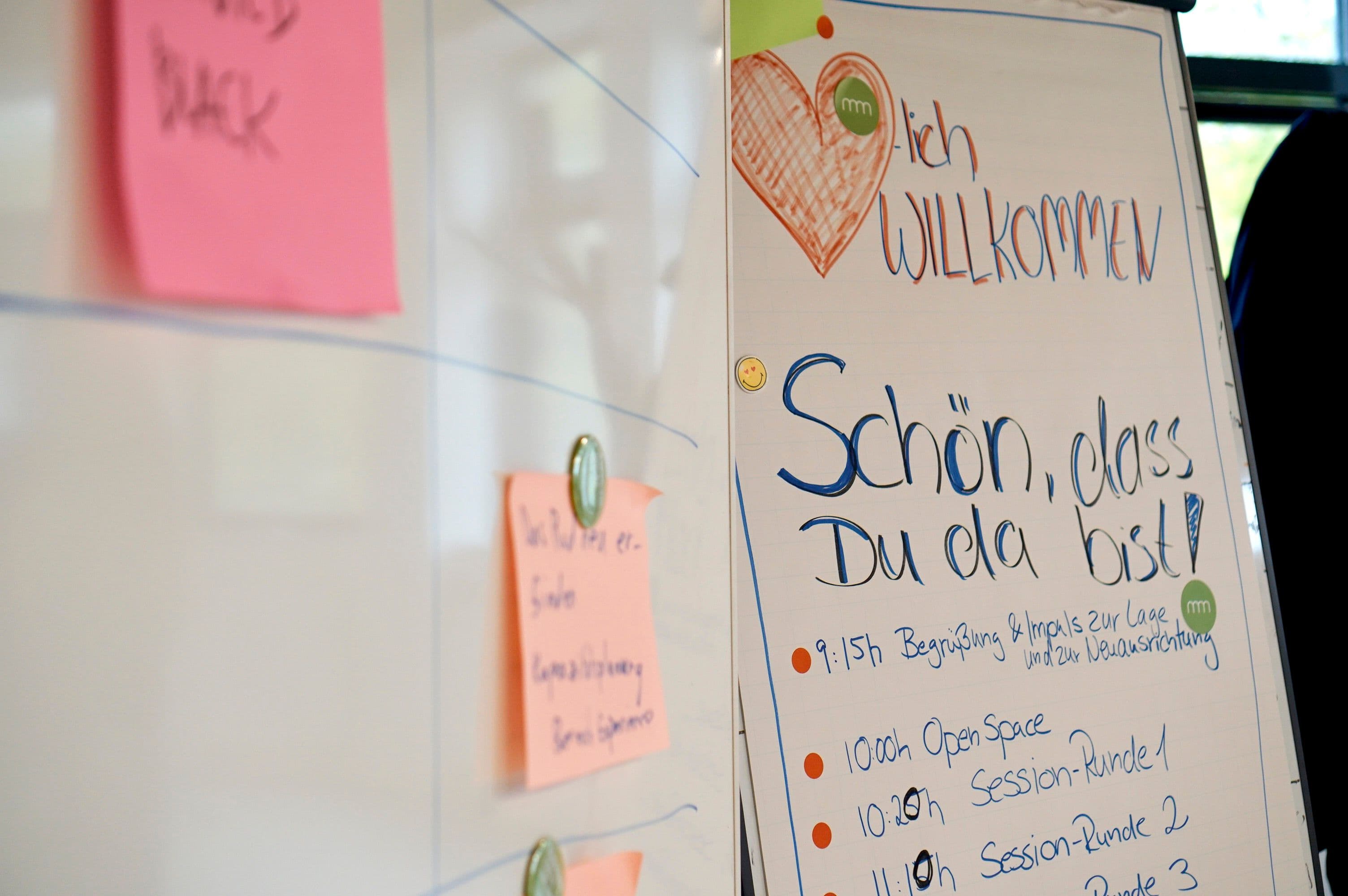
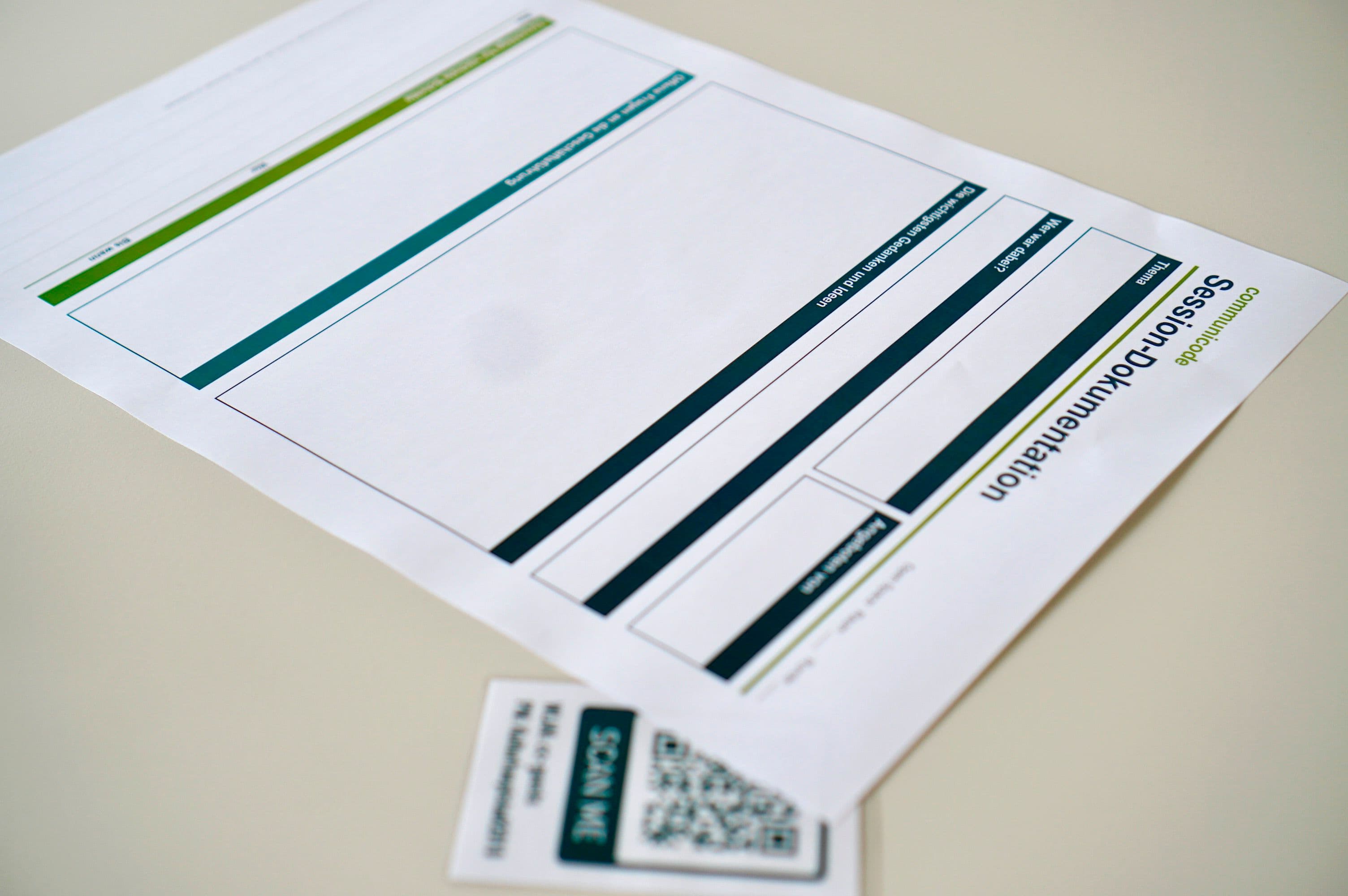
An Open Space session has no predetermined agenda. Anyone who brings a topic offers a session, and everyone else decides for themselves which sessions to join. The “law of two feet” applies: If you’re not learning anything or can’t contribute to a session, move on to the next one. At the end, each session posts its documentation on the results wall.
It includes:
- Topic and participants
- Key thoughts and ideas
- Open questions
- Suggestions for next steps
We host the Open Space every few months for half a day. Good ideas rarely emerge from the ticket system; they’re much more likely to come from interacting with one another. However, there’s often not enough time for this in our day-to-day work and projects. The Open Space deliberately creates this space: to learn from one another across team and project boundaries and to openly address uncertainties.
This works well for a topic like AI. Knowledge about it is unevenly distributed across many organizations and is often concentrated among a few individuals who are particularly deeply involved with it. An open format brings this knowledge into the discussion.
AI – The next major transformation
Like everyone else, we’re currently very focused on the topic of AI. This was also clearly reflected in the sessions offered. Most of them revolved, directly or indirectly, around how we can use AI in a meaningful, safe, and collaborative way.
For us, this is the next major transformation and we’re not alone in this at the moment. Other companies are also grappling with the question of how to approach it.
An overview of the sessions
Five sessions were spread across three rounds in parallel rooms:
- Claude for Non-Developers: Building blocks, limitations, and safe use of Claude in everyday life, with a focus on marketing and business.
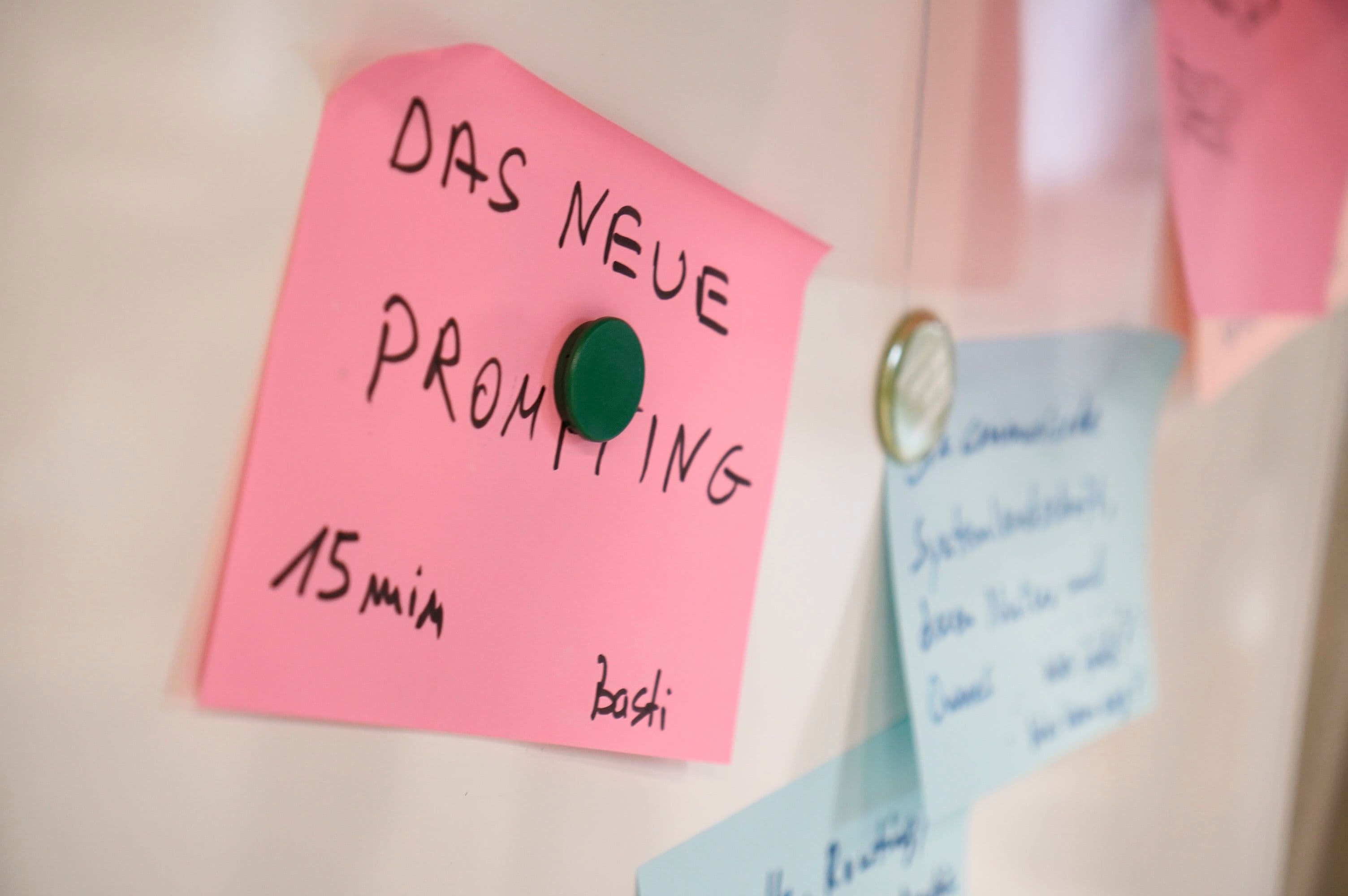
- New prompting: What’s changing with the newer models when it comes to formulating instructions, along with an overview of helpful skills for development.
- AI tools in design: How to use AI agents to develop your own tools and how this is becoming a common standard for creation.
- System landscape: Which tools are in use, who is responsible for them, what is missing, and what can be eliminated. Models, costs, data protection, and pipelines, as well as the question of where software development is headed.
- Capacity planning: Transparency regarding tasks, timelines, and responsibilities in teams with changing workloads.
AI proficiency begins with understanding the tool
The first session of the morning, “Claude for Non-Developers,” drew nearly all the participants in the room. This shows just how great the need for guidance is, even among people who have been using AI for a long time. The session covered the building blocks of working with Claude: the chat feature, projects with fixed instructions and knowledge, skills as saved work instructions, and agents that perform multi-step tasks involving files.
Just as much attention was given to the question of what AI cannot do. Language models are strong when it comes to language and structure, but weak when it comes to verified facts. They can invent numbers and sources, and their understanding of a company is limited to how well it is described to them. One question from the audience summed it up: Why does a model’s knowledge have a date?
Those who understand these limitations work with AI differently. They provide context, enable web search for current topics, and treat the first result as a draft that they review and scrutinize. A simple image served as a guiding principle: Treat Claude like a smart colleague who is starting her first day at the office today. She needs context, a clear task, appropriate material, guidelines on format and rules, and the opportunity to ask questions.
There was a handy rule of thumb for recurring tasks. If you find yourself writing the same prompt for the third time, you should turn it into a skill – that is, a set of instructions that Claude can use on its own for similar tasks.
Why Effective Prompting Is Changing With New Models
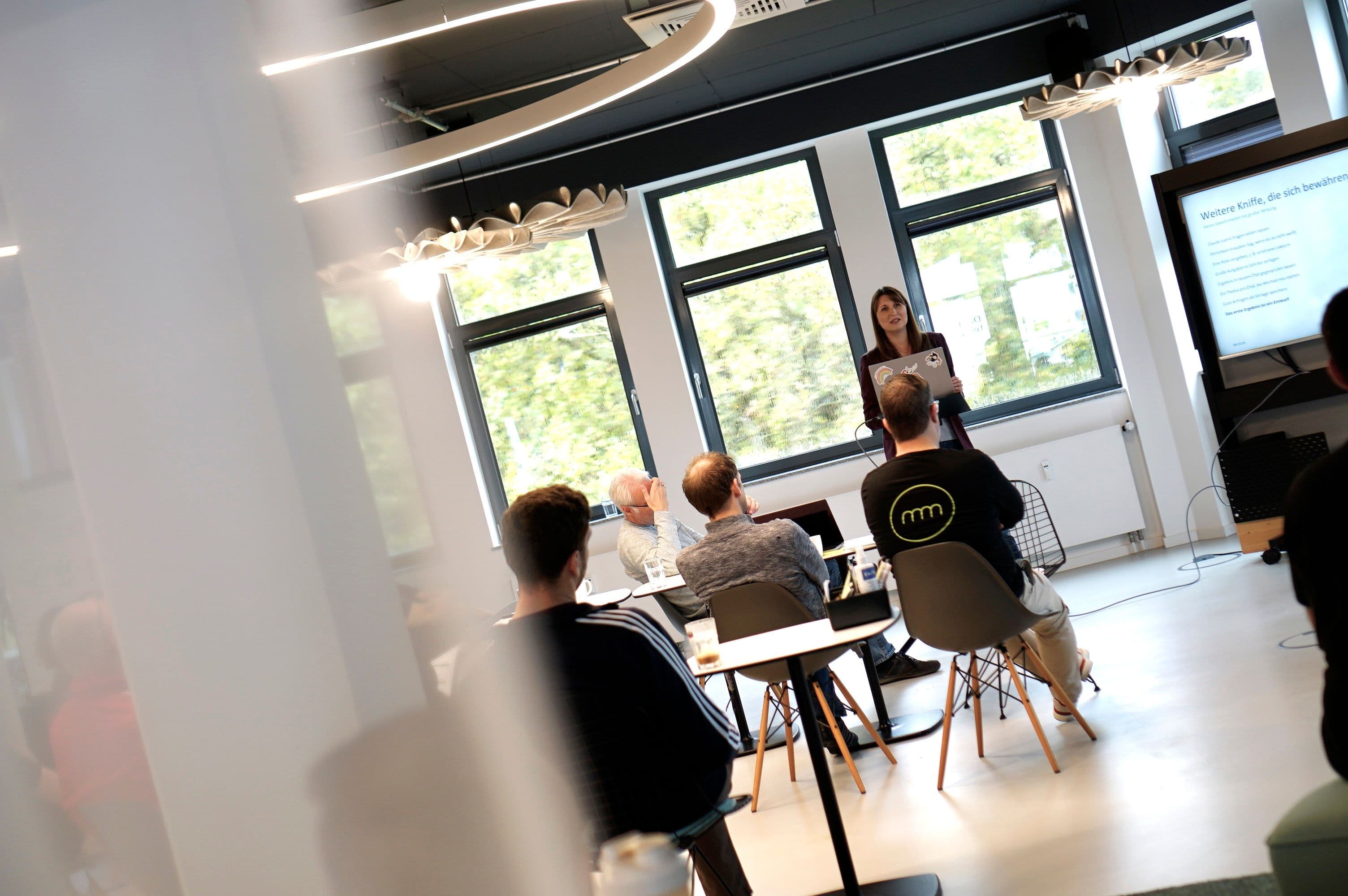
The session on new prompting techniques demonstrated just how rapidly this field is evolving. Newer models possess greater independent judgment. Instructions that were once necessary to guide earlier models can now easily cause them to overshoot the mark. Capital letters and warning labels like “CRITICAL” are more likely to trigger overreactions than to be helpful.
The principles that follow from this sound simple, yet they require a shift in thinking:
- The colleague test: Would a colleague with no prior knowledge understand the prompt? If not, the model won’t understand it either.
- Explain rather than command: An instruction accompanied by an explanation works better because the model can generalize from it.
- Describe the goal: Explaining what the result should be is more effective than providing a list of prohibitions.
- A calm tone: Calm phrasing works better than sounding the alarm.
- Make it clear whether action is needed: If you ask for suggestions, you’ll get suggestions. If you want something implemented, you have to say so.
For companies, this holds an important lesson. AI expertise is not a milestone you reach once and then check off your list. What worked well with earlier models may yield poorer results today. Knowledge about AI therefore needs a place where it can be regularly updated and shared.
From personal AI tools to a shared standard
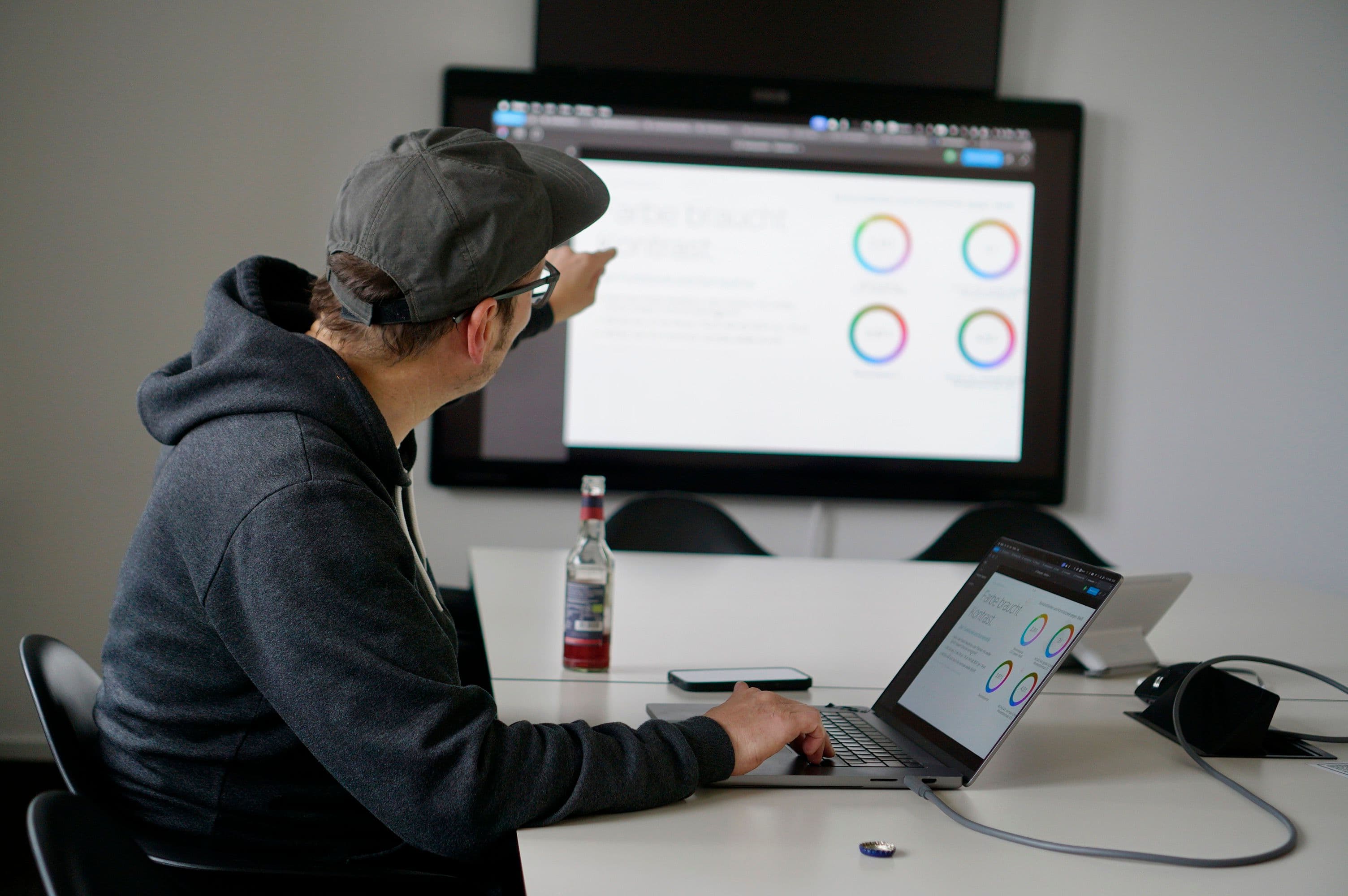
The sessions on design and development demonstrated the full scope of practical AI work within a team. In design, the focus was on developing tools using an agent-based approach – that is, building custom tools with AI agents. One example was a plugin for the design tool Figma that helps with the development of color systems while taking contrast and accessibility into account. During the development process, a colleague presented the skills he uses to work with code in Claude, ranging from code reviews to browser testing and security checks.
In both areas, the same question ultimately arose: How do we make skills and tools available to the entire company? Some individuals have built their own personal “Agentic Stack” – a unique combination of models, skills, and tools – which makes them more productive. However, the team only reaps the benefits when this knowledge is shared. Otherwise, we risk what was explicitly warned against in another session: siloed knowledge without exchange.
Thinking about processes, roles, and tools in context
One session took a holistic look at our system landscape. Which tools are in use, who is responsible for them, what’s missing, and what can be eliminated? It quickly became clear that these questions can only be answered by examining the processes. By mapping out process chains, you can identify where systems work well together and where gaps arise – for example, along the path from planning to billing.
Added to this were questions that should be asked whenever new tools are introduced, whether they involve AI or not. Who is responsible for maintenance? Who handles data and storage locations? And how do you maintain control over results that a system generates automatically?
Portability and autonomy served as guiding principles throughout the day. Data, concepts, and tools should be designed in such a way that they can be transferred or exchanged. Especially in the field of AI, where models and providers are evolving rapidly, this protects against new dependencies. It also became clear that such principles must be measured against business objectives.
The organization of work itself was also put under the microscope. The session on capacity planning focused on teams whose tasks are diverse and change frequently. The goal was to create transparency regarding which tasks are pending, how much time they require, and who will take them on. It was important to everyone that this serve as a guide for the team rather than a management tool. When AI takes over individual work steps, tasks shift between people and systems. This makes it all the more important to be clear about who is responsible for what.
Clear rules and room for uncertainty
The more autonomously AI agents work, the more important clear rules become. In the session for non-developers, six principles for safe use were discussed:
- Always use the company account for business purposes.
- Use personal data only with authorization and, whenever possible, in an anonymized form.
- Passwords, keys, and tokens have no place in chat.
- Always verify numbers, sources, quotes, and legal statements.
- Keep agents limited: Grant only the necessary access rights and treat content from external sources as data, never as instructions.
- Humans approve: A person must always confirm sending, deleting, and publishing.
The last point sums up the approach that was evident throughout the day. AI takes over certain tasks, but humans remain responsible for the outcome.
What companies can take away from our Open Space
One question remained unanswered that day: If everyone is using AI, how do you set yourself apart? There was no ready-made answer. However, the sessions hinted at where the answer might lie: in the context that only an experienced team can provide, in the critical evaluation of results, and in processes where AI is meaningfully integrated.
The questions we’re grappling with are similar across many companies, regardless of whether AI is used in IT, marketing, or e-commerce. Five of these questions are particularly useful for assessing where we stand:
- Where is your AI knowledge located? With individual people, or in a central location that everyone can access?
- Do you understand the processes that AI is intended to transform? Only when process chains are visible can you assess where AI creates real added value and where systems need to work together.
- Are you staying adaptable? Can you switch data, concepts, and tools as models and providers evolve?
- Are there guidelines for when someone should give the go-ahead? The more agents handle tasks independently, the more important this boundary becomes.
- Is there room for open-ended questions? Uncertainty doesn’t disappear just because you ignore it. A format in which employees set their own agenda can help with this.
For us, the Open Space was a midpoint. Some projects are already underway, while others still need people to take the lead, and the next Open Space will show what has proven effective. But one thing became clear that day: AI is changing the way work is done through many individual decisions about how teams share knowledge, design processes, and allocate responsibility. Making these decisions consciously remains a shared responsibility.

Nicole Teckentrup
Nicole Teckentrup is Online Marketing Lead and is responsible for ensuring that digital initiatives yield measurable results. She brings deep expertise in SEO/SEA to the table and leverages GEO as a new discipline to secure long-term digital visibility. She remains constantly curious about new knowledge, new methods, and technological developments – because online marketing continues to evolve, and she evolves with it.